Choosing the wrong certification wastes valuable time and money. GIPMC resolves this with a clear, tiered structure that matches credentials to your exact experience level, from foundational knowledge to executive governance, ensuring every certification advances your career.
Choosing a certification and you have no idea where it fits in your career? It is bound to lead to wasted time and money. Should you start with a foundation-level credential, or are you ready to try something that needs considerable hands-on expertise?
This blog will present a tiered guide on how we at GIPMC structure our certification tiers, from entry-point credentials for newcomers to advanced, executive programs for experienced practitioners. Read on to know where you stand and match your credential accordingly.
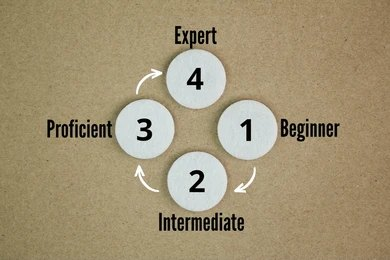
We structure our GIPMC certification levels deliberately, not randomly. Rather than offering a single flat credential per subject, it is organized into foundational, professional, and advanced tiers.
Our certifications span from AI and cybersecurity to project leadership, quality engineering, and finance. Each tier reflects a different depth of knowledge that is applicable in the real world.
Following this tiered system means that one stack can carry a professional from their first year in the field through to a director-level credential and job role without switching certification bodies.
| Tier | Typical audience | What it validates | Example GIPMC focus areas |
| Foundation/ Associate | Fresh graduates, career switchers, non-technical professionals | Core concepts, terminology, guided application | • AI Foundations & Literacy • Certified Associate Project Leader • Foundation Software Tester Credential |
| Professional | 1–5 years' experience, individual contributors | Independent execution, applied technical skill | • AI Associate-Level Technical Certifications • Business Analysis Foundation Specialist • Cloud Testing Specialist |
| Advanced/ Expert | 5+ years' experience, specialists, team leads | Complex problem-solving, specialized system design | • Advanced Machine Learning Architect • Lean Black Practitioner • Advanced Test Management Expert |
| Executive/ Governance | Senior managers, directors, C-suite | Strategic oversight, risk governance, organizational leadership | • Executive AI Leadership Certification • Global Project Director Credential • ISO/IEC 42001 Lead Auditor Certification |
Table 1: GIPMC Certification Tiers
Beginner GIPMC certifications provide structured proof of foundational competence without requiring years of prior experience. This tier is suitable for entry-level candidates who are beginning their career in any field for the first time.
Target Candidates: Designed specifically as a GIPMC certification for fresh graduates, career switchers, and professionals building resume credibility.
Key Focus Areas:
|
TIP Before enrolling, check whether a certification lists prerequisites like "X years of experience" or "prior technical role." GIPMC's foundation and associate-tier programs typically list none (other than resume submission, supervisor verification), a quick filter that saves fresh graduates from applying to credentials scoped for mid-career professionals. |
To understand the relevance of the entry-level track, you will need to compare it with the advanced track. Here's how the entry-level vs advanced certifications track looks in terms of the following factors.
| Factor | Entry-level certifications | Advanced certifications |
| Prerequisite experience | None to minimal | Several years of applied, domain-specific experience |
| Content focus | Terminology, core concepts, guided workflows | System design, strategic judgment, complex problem-solving |
| Typical candidate | Fresh graduate, career switcher, generalist | Specialist, team lead, senior practitioner |
| Assessment depth | Concept recall and applied basics | Scenario-based, multi-step technical or strategic evaluation |
| Career outcome | Entry into the field, resume credibility | Promotion readiness, specialization, leadership eligibility |
Table 2: Entry-Level vs Advanced Certification Outcomes
Designed for experienced professionals, advanced GIPMC certifications validate deep expertise and high-level judgement in complex operational scenarios. The following credentials formalize career growth across expert and executive tiers:
Target Professionals: A GIPMC certification for experienced professionals serves specialists, team leads, and directors who handle strategic decision-making daily.
Key Track Pathways:
Career Impact: These certifications work as a continuous ladder to certify cross-functional leadership and complex problem-solving.
|
USE CASE A mid-career IT auditor with five years of compliance experience pursues an ISO/IEC 27001:2022 Lead Auditor credential to formally certify skills already used on the job, positioning them for lead- auditor assignments and higher-stakes client engagements. |
Matching GIPMC certifications by career stage means looking past the certification name and comparing it against your daily job responsibilities. Try this useful test by asking yourself: does the current role already require what the certification claims to validate, or would it teach a skill for a role not yet held?
Mapping career stage honestly against this scale, rather than chasing the most prestigious-sounding title, produces a credential employers recognize as appropriately earned.
| Career stage | Recommended tier | Example GIPMC focus areas |
| Student/fresh graduate | Foundation/Associate | • AI Foundations & Literacy • Certified Associate Project Leader • Foundation Software Tester Credential |
| 1–3 years' experience | Professional | • AI Associate-Level Technical Certifications • Business Analysis Foundation Specialist • Cloud Testing Specialist |
| 3–7 years' experience | Advanced/Expert | • Advanced Machine Learning Architect • Lean Black Practitioner • Advanced Test Management Expert |
| 7+ years' experience/leadership | Executive/Governance | • Executive AI Leadership Certification • Global Project Director Credential • ISO/IEC 42001 Lead Auditor Certification |
Table 3: Matching Certification to Your Career Stage
|
CAUTION Skipping tiers to chase an advanced-sounding title can backfire. Employers and assessors often expect a documented progression; jumping straight to an executive or expert-tier credential without foundation-level grounding can raise more questions than it answers. |
Simply getting the credentials often does not help if you are not retaining anything from the programs. Read our other blog on “Learning Agility vs. Domain Expertise: What Matters More in the Long Term?” to understand in detail.
A professional certification roadmap works best as a sequence, not a single purchase. Start by identifying the domain, AI, project leadership, quality engineering, cybersecurity, or another GIPMC track, and locate its foundation-tier entry point.
From there, plan a professional-tier credential once the skill is being applied independently, and reserve advanced or executive-tier programs for when responsibilities have genuinely expanded to match.
|
USE CASE A supply chain coordinator plans a three-year roadmap; starting with an associate-tier operations credential, adding a professional-tier logistics certification after a promotion, and targeting a senior operations leadership credential once managing a team. |
When you are two months into your first role or leading a department, the right certification is the one that matches what you are already doing, not the one with the most impressive name!
GIPMC lets you build a recognizable, verifiable progression within a single track. Start where you honestly are, and let each credential earn the next one.
Explore our range of certifications for different fields according to your career stage. If you are not sure, get in touch with us or register directly to start with a program today!
Most GIPMC certifications require renewal or continuing education credits every three years to maintain active, industry-aligned standing.
Exams are available via secure online remote proctoring, allowing candidates to complete assessments globally from their homes. Make sure your system is working properly and conduct a functional check one day before the exam.
No, candidates must demonstrate foundational domain knowledge or pass prerequisites before attempting advanced, expert, or executive-tier credentials.
Exams feature multiple-choice and scenario-based questions, requiring a score of 70% or higher to achieve credential certification.
Yes, GIPMC provides comprehensive study guides, syllabus outlines, and official practice assessments for every credential level upon registration.