A resume opens doors, but a portfolio proves capability. Understanding when and how to use both helps professionals stand out in competitive hiring markets. This guide explains their unique roles, practical applications, and strategies to strengthen career opportunities across industries while highlighting measurable achievements.
Modern recruitment goes beyond reviewing job titles and educational qualifications. Employers often seek evidence of real-world performance alongside professional experience. So, knowing how portfolios and resumes complement each other enables candidates to present stronger applications, demonstrate practical expertise, and improve hiring outcomes across global industries and career levels.
While a resume helps you secure an interview, a well-structured portfolio demonstrates the skills, achievements, and business impact that help you stand out. But is that all? What could boost your hiring opportunities? What could set you apart? Let’s find out the differences and how they help, along with certifications.
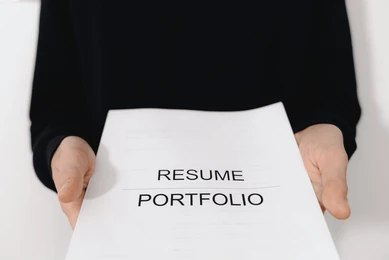
A resume summarizes qualifications and career history, while a portfolio provides verified proof of skills, projects, and measurable achievements. Understanding the portfolio vs resume helps candidates prepare applications, as per modern employer expectations.
So, understanding the difference between a portfolio and a resume is essential as employers increasingly evaluate demonstrated competence rather than relying solely on written claims. Check the table below for a broader overview.
| Aspect | Portfolio | Resume |
| Purpose | Demonstrates skills through tangible work samples and projects. | Summarizes qualifications, work history, and education. |
| Content | Case studies, project reports, presentations, designs, or code samples. | Work history, education, core skills, certifications, and high-level achievements. |
| Length | Flexible; ranges from a few curated pages to an interactive digital collection. | Concise; typically 1–2 pages. |
| Format | Digital, interactive website, slide deck, or PDF case study collection. | Standard ATS-friendly PDF or Word document. |
| Focus | Shows proof of what you accomplished and how you solved problems. | Describes your professional history and responsibilities. |
| Use in Hiring | Evaluated during mid-to-late interview stages and final selection. | Used for initial recruiter screening and ATS filtering. |
| Best For | Project managers, designers, consultants, auditors, and engineers. | All job seekers applying across entry, mid, and executive levels. |
Table 1: Differences between Portfolios and Resume
A resume is the first screening tool for recruiters. It provides a concise overview of your professional background, including your work experience, education, certifications, and key skills, helping employers quickly determine whether you meet the basic qualifications for a role.
Here's what it includes.
A portfolio reflects real projects, work samples, case studies, and measurable achievements that demonstrate your abilities in practical situations. A portfolio helps employers assess the quality of your work and the impact you have delivered, based on the tangible proof of your expertise.
Here’s what it includes.
So, if you are comparing the resume and portfolio, remember, portfolios often work as the deciding factor for senior, technical, consulting, project management, auditing, engineering, and leadership positions. Moreover, portfolios demonstrate measurable business value for professionals working in project, program, portfolio, governance, or asset management.
Yes, professional certifications strengthen both your resume and portfolio by validating your expertise with recognized credentials and increasing employer confidence. If your portfolio demonstrates how you've applied the certified knowledge to achieve measurable results, it increases your priority and opportunities in the global talent pool.
Professionals pursuing globally recognized credentials can strengthen their career profile with several GIPMC certifications to experience premium job opportunities and salaries. These certifications align with practical competencies preferred by employers managing complex organizational initiatives. Here’s a list of certifications that can be valuable for professionals in various industries.
Tips: Instead of listing certifications, professionals should include portfolio examples showing how certification knowledge improved project outcomes, governance, risk mitigation, or organizational performance.
The resume vs. portfolio debate often falsely implies that employers prefer one over the other. In reality, hiring teams evaluate both in tandem throughout the recruitment lifecycle. While a resume is essential for candidates during initial screening, a portfolio offers evidence validating their skills, accomplishments, and ability to deliver results.
Here’s what employers focus on while hiring.
| Hiring Stage | Primary Employer Focus | Evaluated Artifact |
| Resume Screening | Baseline qualifications, experience, and keyword fit | Resume / ATS Submission |
| Interview | Communication, problem-solving, and culture alignment | Behavioral Questions |
| Portfolio Review | Tangible evidence of execution and business impact | Work Samples / Case Studies |
| Reference Check | Professional credibility and past reliability | Former Managers / Peers |
| Certification Verification | Commitment to continuous professional development | Verified Credentials |
Table 2: Hiring Stages and What Employers Focus on
Portfolio Examples That Impress Recruiters
A strong portfolio offers a compelling story of your professional capabilities. But how does it help? Why can an impressive portfolio fuel your career?
Modern recruiters evaluate how effectively candidates solve problems, mitigate risks, and drive business value. So, make sure that your portfolio includes your role, the challenges you faced, the actions you took, and the outcomes.
Here’re some examples.
Case Study: Turning Credentials into Career Growth
A mid-level project coordinator applying for international project management roles initially relied solely on a resume and struggled to secure interview callbacks. After earning a Project Management Certification (PMC) from GIPMC, they built a targeted portfolio featuring real-time project dashboards, risk governance reports, and measurable performance metrics from prior initiatives.
During interviews, hiring managers valued the practical proof alongside the verified credential—a combination that helped them secure a higher-paying project leadership role within three months.
Since understanding the difference between a portfolio and a resume often becomes an issue, candidates make some mistakes, which affect their credibility in the global job market. So, here we provide a list of common mistakes that you must avoid to explore better opportunities in several industries.
Remember, your success highly depends on demonstrating value rather than describing experience. Professionals who combine verified qualifications with practical evidence build greater credibility, strengthen employer confidence, and improve long-term career prospects. Maintaining both documents ensures professional credibility in the evolving recruitment practices and competitive global employment markets.
Whether you aim to strengthen your expertise in project, program, portfolio, asset, risk, or PMO management, GIPMC's globally recognized certification programs can help validate your skills and support long-term career growth. These industry-recognized credentials can also enhance the credibility of both your resume and professional portfolio, helping you stand out in today's competitive global job market.
Yes, many entry-level roles only require a resume. However, as professionals progress into leadership, consulting, project, or technical positions, a portfolio provides tangible evidence of capability and often strengthens interview performance.
Yes, as employers often verify professional credentials during recruitment. Listing certifications on your resume while demonstrating how you applied those skills within your portfolio creates stronger credibility and supports competency-based hiring decisions.
Yes, employers highly appreciate digital portfolios, since they are easier to review during remote hiring. A well-organized online or PDF portfolio can effectively support interviews and highlight measurable achievements.
Review your portfolio at least every three to six months or after completing major projects. Regular updates ensure your achievements, certifications, and measurable outcomes remain relevant to current hiring expectations.
Yes, but sensitive information should always be removed or anonymized. Focus on your role, methodologies, leadership, and measurable outcomes without revealing proprietary business data or client-specific details.