Strategic management and strategic leadership work together to help organizations achieve sustainable growth, innovation, and resilience. While one focuses on planning and execution, the other inspires people and drives change. Understanding their differences enables professionals to develop balanced capabilities that strengthen organizational performance across industries and global business environments.
Modern organizations require both structured planning and visionary leadership to remain competitive. Although these concepts often overlap, they serve different purposes in achieving business success.
Strategic management provides the frameworks, processes, and governance needed to achieve organizational objectives, while strategic leadership inspires people, drives innovation, and enables organizations to adapt to changing business environments. The combined factor creates a balanced approach that supports sustainable growth, operational excellence, and long-term resilience.
But how do they complement each other? How do they help professionals improve decision-making and organizational alignment? How do they manage complex global business challenges? Let’s find out the answers here.
Organizations now operate in a complex business landscape where rapid technological advances, economic uncertainty, geopolitical disruptions, and changing customer expectations play a pivotal role.
However, in the current context, professionals often use strategic management and strategic leadership interchangeably. Although they are linked to each other, they represent distinct organizational capabilities. While one focuses on designing and implementing strategies, the other concentrates on influencing people, shaping culture, and guiding organizations through uncertainty.
So, understanding the difference between strategic management and strategic leadership helps professionals balance structured execution with visionary decision-making. Mastering both enables organizations to achieve sustainable growth, adapt to change, and build long-term competitive advantage.
Strategic management is the systematic process of setting organizational objectives, analyzing internal and external environments, developing strategies, allocating resources, implementing initiatives, and monitoring performance. It provides the structured framework that transforms organizational vision into measurable business outcomes.
Core Activities
Managers prioritize departmental contributions toward shared organizational objectives through measurable plans and performance indicators.
Strategic leadership is the organizational focus on influencing people to achieve organizational goals while preparing the organization for future challenges. Rather than making plans, leaders inspire innovation, create vision, encourage adaptability, and build high-performing cultures.
Key Responsibilities of Strategic Leaders
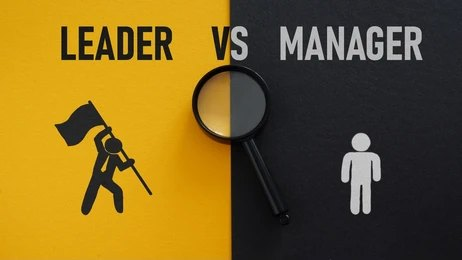
Strategic management and strategic leadership differ in their primary focus, responsibilities, and organizational impact. Understanding these distinctions helps professionals apply the right approach to planning, execution, innovation, and long-term business success.
| Aspect | Strategic Management | Strategic Leadership |
| Primary Focus | Planning and execution | Vision and influence |
| Main Objective | Achieve organizational goals efficiently | Inspire long-term organizational success |
| Orientation | Processes and systems | People and culture |
| Decision Style | Analytical and structured | Visionary and adaptive |
| Performance Measurement | KPIs and strategic objectives | Organizational engagement and transformation |
| Time Horizon | Medium to long term | Long-term organizational sustainability |
| Key Competencies | Planning, governance, analysis | Communication, influence, innovation |
Table: Differences between Strategic Management and Strategic Leadership
Note: Strategic leadership and management are complementary rather than competing. Successful organizations require both structured execution and inspirational leadership.
Strategic management and strategic leadership work together by aligning organizational vision with structured planning, execution, and performance management. While leadership inspires people and drives change, management ensures strategies are effectively implemented to achieve long-term business goals.
Modern organizations often integrate strategic management with strategic leadership rather than treating them as separate functions.
Here are some examples of how they work.
Case Study
When Satya Nadella became CEO of Microsoft in 2014, he combined strategic leadership with disciplined strategic management to transform the company's direction. He introduced a cloud-first vision, fostered a culture of innovation and collaboration, and aligned business investments with long-term strategic goals.
The result was significant growth in Microsoft Azure, improved employee engagement, and a dramatic increase in the company's market value, demonstrating how visionary leadership and structured execution create sustainable competitive advantage.
Professionals need both skill sets, strategic leadership and management, to translate organizational vision into measurable results while effectively leading people through change and uncertainty. Combining strategic planning with strong leadership enhances decision-making, execution, innovation, and long-term career growth.
Instead of choosing between analytical management or visionary leadership, modern enterprises seek hybrid professionals who combine both skill sets. Organizations prioritize candidates who can demonstrate these core integrated competencies:
Here are some key qualities employers prioritize.
Professional certifications help individuals incorporate strategic concepts into practical workplace competencies while demonstrating globally recognized expertise.
For professionals seeking internationally recognized credentials, GIPMC offers certifications that support strategic planning, governance, organizational leadership, and project excellence. Here are some major certifications empowering the strategic capabilities of employees.
Here are some common misconceptions regarding strategic management and leadership that affect the overall practices and candidates’ approach towards developing skills.
Fact: Resilient organizations cultivate strategic leadership at every tier; empowering program managers and team leads to adapt strategy dynamically on the ground.
Fact: They are complementary disciplines. Exceptional managers regularly apply leadership qualities to inspire teams, while visionary leaders rely on managerial discipline to execute strategy.
Fact: Vision without structured governance, resource allocation, and execution leads to strategic failure. Inspiration requires systematic management to achieve tangible business outcomes.
Fact: Modern strategic management is an iterative, continuous process that adapts dynamically to market shifts, technological advances, and emerging risks.
A frequent misconception you may encounter is that 'strategic leadership' is only C-suite executives. But remember, the most resilient organizations cultivate strategic leadership at the departmental level, empowering program managers and team leads to adapt strategy dynamically on the ground.
Organizations achieve sustainable success by combining structured planning with visionary leadership. Professionals with strategic management and leadership skills are effective at driving organizational growth, managing change, and delivering measurable value. Professional development and globally recognized credentials further strengthen the ability to lead confidently in the current complex business environments.
Whether you are planning to improve leadership skills or strengthen organizational strategy, GIPMC offers convenient learning pathways that can help you build practical skills, enhance credibility, and create lasting organizational impact.
Yes. Professionals at every organizational level can demonstrate strategic leadership by influencing decisions, encouraging innovation, mentoring colleagues, and supporting organizational objectives. Leadership is demonstrated through actions and impacts the overall job portfolio.
Strategic leaders help employees embrace technological change by communicating a clear vision, addressing resistance, encouraging collaboration, and promoting continuous learning. Their ability to build trust often determines whether digital transformation initiatives succeed or fail.
Portfolio management helps organizations prioritize investments, balance risks, allocate resources effectively, and ensure projects meet broader business objectives. It provides visibility into enterprise-wide initiatives and supports informed executive decision-making.
Most organizations conduct formal strategic reviews annually while monitoring performance throughout the year. However, rapidly changing industries may require quarterly reviews to respond effectively to economic shifts, emerging technologies, regulatory changes, or competitive pressures.
Project managers, program managers, portfolio managers, department heads, consultants, business analysts, transformation leaders, and aspiring executives all benefit. These competencies improve decision-making, stakeholder engagement, organizational alignment, and long-term career progression.