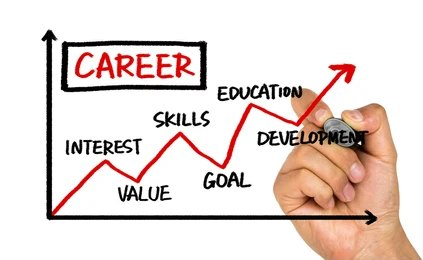
A career shift can mean moving up to senior positions, moving sideways to similar positions in a different department or industry, or starting fresh with a completely new career. Professionals need to identify whether they need career growth opportunities or a complete career change, and choose the right next step.
Sometimes you may feel stuck at work and find that nothing about your job excites you anymore. Your first thought is likely to be that you need to change jobs, move to a new company, or maybe try a different role in a new industry.
If you’re experiencing similar emotions about your job, stop for a while. Take a few minutes and ask yourself: Do you actually need a new career? Maybe you just need stronger responsibilities, bigger challenges, better skills, or clearer career growth opportunities to reignite the spark in your professional life. Or maybe your goals have changed enough to make a career change the smarter move. Your aim should always be to evaluate your current circumstances accurately so that you can determine the best next steps to help you achieve your professional goals.
The first step is to understand the answer to what career growth is and how it differs from changing careers, especially in relation to your specific career situation.
Career growth usually means moving forward in your career, but within your existing professional direction. Your professional growth may include moving into a senior position, being responsible for managing larger projects, taking on leadership responsibilities, or developing specialized expertise for higher-responsibility roles. Learn how vertical career growth differs from lateral career growth.
A career change, on the other hand, will take you somewhere substantially different from your current career position or progression path. You will likely move into a different function, industry, or profession because your current path no longer matches your interests and strengths, nor does it support your long-term goals.
To identify the accurate reason behind your dissatisfaction with your current career, you need to ask yourself a few questions, including:
If you still like your field but feel that your skills and capabilities aren’t being utilized properly, how to improve career growth may be the more relevant concern.
You could seek a leadership role, specialize in an area that is more valuable to organizations in your industry/field, take ownership of larger initiatives, or add professional certification and capabilities.
On the other hand, if your daily responsibilities no longer interest you and another field consistently attracts your attention, a career shift may be more relevant to you.
| Your Situation | Best Career Direction For You | What You Can Do Next |
| You enjoy your field but feel stagnant | Career growth | Seek greater responsibility |
| You want to move into management | Career growth | Build leadership capabilities |
| Your skills no longer match your goals | Career growth or change | Identify transferable skills |
| You dislike the nature of your work | Career change | Research alternative careers |
| You want an entirely different profession | Career change | Build relevant credentials |
Table 1: Career Growth vs. Career Change Decision Guide
The important point is simple: do not change careers merely because your current job feels frustrating or it doesn’t excite you any longer. First, you must determine whether the problem comes from your role, employer, or career direction.
A career change becomes more reasonable when your professional goals have moved well beyond the scope of your current role.
For example, you may have spent years in one function but now want to work in project leadership, business transformation, technology, consulting, or another discipline. And while this career desire is completely justified, it does not mean you need to start from zero. Your existing experience can always give you transferable skills such as:
The key to a successful career shift is to learn how you can connect the high-value skills from your past and current roles to your target role.
Well, you could look for some key signs that will point to a career change, including:
Before you make a decision, ask: How do I make a career change without wasting the experience I already have? You can ensure a thorough evaluation by:
Your career growth/career change resume, career change cover letter, and other application materials also need to support your story.
Your career change resume should emphasize relevant achievements and transferable capabilities instead of simply listing your previous companies, positions, and responsibilities. You need to design your career change cover letter to explain why your experience makes sense for the new direction.
Pro Tip: Do not hide your previous career (even the employment that dragged you back). Instead, focus on showing employers how it prepared you for the next career growth opportunities and your subsequent career to date.
Professional certifications can be of great value to your career growth or change. However, you must choose credentials that strengthen your existing capabilities or build credible expertise for your target field. GIPMC offers certifications across diverse professional areas, including:
| GIPMC Certification | Best For | Career Direction | Why Does It Help? |
| Project Management Certification (PMC) | Project professionals | Career growth/change | Builds broad project management capability |
| Certified Associate Project Leader (CAPL) | Early-career professionals | Career change | Establishes foundational project leadership skills |
| ISO 21500 Lead Project Manager | Experienced professionals | Career growth | Supports advanced project leadership and governance |
| Change Management Associate (CMA-G) | Professionals entering change roles | Career change | Builds a foundation in organizational change |
| Certified Change Management Professional (CCMP-G) | Experienced professionals | Career growth/change | Develops structured change leadership capabilities |
Table 2: Key GIPMC Certifications for Significant Career Growth/Change
These certification options reflect different career stages and do not serve as one universal answer. So, when you’re comparing the best certifications to get for career growth, you should always start by identifying the responsibilities you want next, and not just choose credentials based on the certification that looks the most impressive.
For a career change, examine whether the credential gives you skills and credibility that will connect directly to your target role. This will make it more practical and easier for you to choose the best certifications to get for a career change.
You do not need to make the decision based entirely on emotion. You can easily choose the right direction by using a simple comparison between your current position and your desired future.
You should choose career growth when:
On the other hand, you should consider a career change when:
If you’re wondering, “How can I improve my career growth?”, you need to focus on measurable actions: take ownership of larger projects, develop leadership skills, build specialized knowledge, and pursue credentials aligned with your target role.
If you decide to change career direction, you need to learn how to prepare for a career change before you resign from your current position. You need to research the target industry, assess your financial runway, build relevant skills, update your career change resume, and prepare a focused career change cover letter.
Most importantly, you shouldn’t treat a career change as an escape from one difficult job. Instead, you should treat it as a move toward a clearly researched professional goal.
The right answer will depend on where you want to go, and not simply how unhappy you feel today.
Career growth makes sense when your current field still fits your ambitions, but your role has stopped challenging you. On the other hand, a career change makes more sense when your interests, strengths, and long-term goals point toward a substantially different direction.
A thoughtful career shift can preserve valuable experience while helping you build the capabilities that you will need for your next professional chapter.
Talk to a GIPMC career consultant today to discuss the challenges of your current job and your career goals to identify the best career move and the right certification pathway that’ll get you there!
GIPMC credentials align with international quality standards (such as ISO 9001:2015 and ISO 21001:2025) and industry best practices. US employers across tech, healthcare, and finance recognize these scenario-based credentials because they validate practical execution skills rather than mere theoretical memorization.
Yes. While pivot candidates often face initial compensation trade-offs due to entering a new field, holding a recognized certification will validate your immediate functional readiness. In the US market, specialized credentials can help you bridge salary gaps, often commanding 10% to 25% higher starting offers compared to uncredentialed applicants.
Because GIPMC curricula focus on practical application and scenario-based problem-solving, most working professionals complete their self-paced preparation within 3 to 6 weeks, devoting approximately 4 to 8 hours per week to study materials.
Yes. All GIPMC exams feature secure, online-proctored testing options. You can schedule and complete your certification exam directly from your home or office anywhere in the United States without needing to visit a physical testing center.
Traditional US organizations like PMI (for PMP) or HRCI often require strict prerequisite hours and lengthy maintenance cycles. GIPMC offers modern, flexible, and scenario-driven certifications focused on emerging cross-functional skills, such as AI integration, agile project leadership, and organizational change, making them faster and highly practical pathways for career growth or pivots.