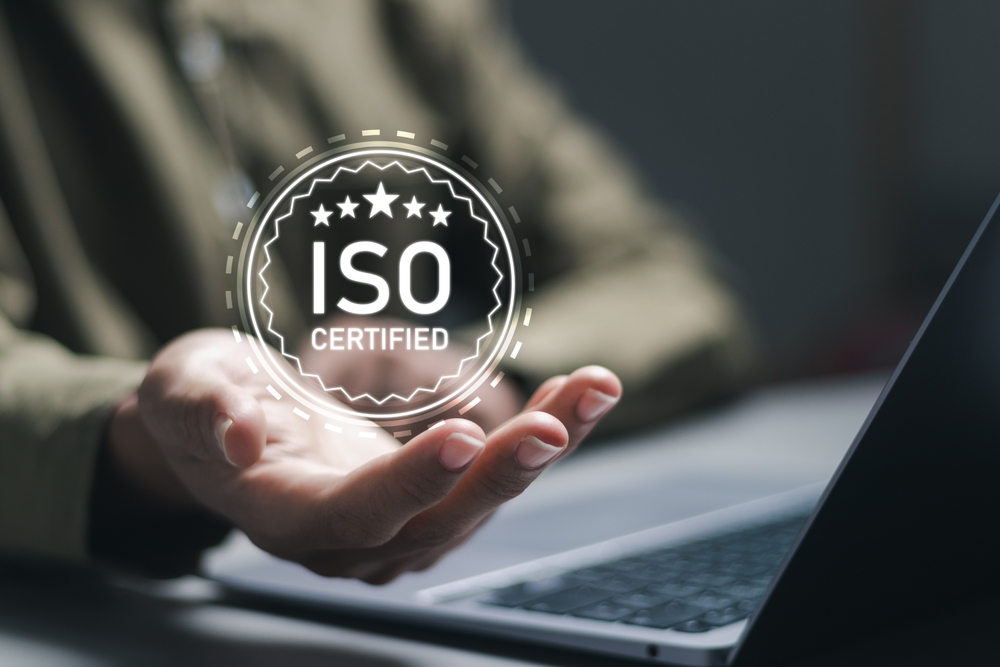
ISO certification is a global “seal of approval”, recognizing companies that meet international standards of quality, safety, and security. For businesses, ISO certification for organizations is the metric that gets them vetted as trusted vendors. Similarly, individual ISO certification programs empower professionals to prove their credibility as industry experts in system implementation or performance auditing. In 2026, ISO certification is a prerequisite for any trade involving high-value data, manufacturing, or professional services.
What is ISO certification and why does it matter? Well, the answer is simple. An ISO certificate is the first thing businesses check before hiring a vendor.
Businesses need global partners they can rely on to provide top-quality services. Now, you cannot go about checking the quality of every vendor you consider. And the cost of hiring an unreliable vendor can easily become millions in losses before you realize it.
The solution – an ISO certified vendor with evaluated and proven service quality and security. In essence, the best way ISO certification can be explained is that it becomes the bond of trust between unknown entities looking to trade.
Today, businesses want vendors where the organization and its employees are ISO certified. Let’s see what this means.
| Feature | For Organizations | For Individuals |
| Focus Area | Evaluates the management system and internal company processes. | Evaluates the skills and adherence of specific professionals. |
| Main Objective | Guarantees repeatable results and consistent quality in products or services. | Ensures the efficient functioning of the overall company system. |
| Core Benefit | Reduces the risk of failure in your project or global supply chain. | Provides confidence that staff are globally tested and adequately skilled. |
| Business Outcome | Peace of mind knowing your products meet top-quality standards. | Guaranteed high-quality outcomes and improved daily productivity. |
| Strategic Role | Acts as the "Foundational Framework" for the business. | Acts as the "Expert Engine" that drives the framework. |
Table 1: ISO Certification: Organizations vs. Individuals
For global businesses, seeing an ISO certification logo on the vendor website blog is just the beginning. Modern businesses prioritize vendors that fulfill ISO certification requirements for companies and individuals simultaneously. Today, total quality management means:
The process of ISO certification is a strategic evolution, with its usual trajectory being as follows:
Now, businesses can get ISO certified using one of two ways. They can either perform the first three steps internally and call an external evaluator for the fourth, or they can engage a professional certification partner to offer highly specialized guidance and call an accredited third-party evaluator for the final audit.
Individual ISO certification is different from ISO for organizations. An individual with ISO certification has the expertise and credentials to lead, audit, or implement the systems that are ISO certified within their company. Getting ISO certified can also be a strategic career move, as it allows:
| Certification Level | Who Is It For? | Your Core Value |
| Foundation/Awareness | Entry-level staff or non-technical managers. | Understanding the "why" and "how" of the standard. |
| Internal Auditor | Team leaders and department heads. | The ability to fix problems inside your own company. |
| Lead Implementer | Project managers and consultants. | The skill to build an entire system from scratch. |
| Lead Auditor | Professional auditors and senior managers. | The authority to evaluate and sign off on global systems. |
Table 2: Individual Certification Comparison
| Standard | Core Focus | Critical For | US Strategic Value |
| ISO 9001 | Quality (QMS) | Manufacturing & Sourcing | Ensures "No Surprises" in delivery. |
| ISO 27001 | Data Security | IT, SaaS, & Fintech | Critical for US HIPAA/SOC2 alignment. |
| ISO 45001 | Health & Safety | Construction & Logistics | Mitigates ESG and liability risks. |
| ISO/IEC 42001 | AI Management | Tech & R&D | The new 2026 standard for AI ethics or governance. |
Table 3: ISO Certification Types and Standards Comparison
Check out the entire portfolio of ISO certifications at GIPMC.
When businesses see potential vendors with the ISO certification logo on their website, it tells them three things:
There is a big difference between being ISO certified and ISO compliant. At a glance, here’s how they differ:
| Feature | ISO Compliant | ISO Certified |
| Verification | Internal only; processes "match" the standards. | External; evaluated by an independent, accredited body. |
| Market Trust | Unlikely to gain high levels of business trust. | High trust; seen as a guarantee of superior quality. |
| Client Perception | May "not mean much" to international clients. | Recognized as meeting the highest international standards. |
| Requirement | Voluntary internal alignment. | Often, a mandatory requirement for global contracts. |
| Key Outcome | Claims of quality are self-declared. | Claims of quality are officially validated. |
Table 4: ISO Certified vs. ISO Compliant
Achieving global status is hard. GIPMC acts as a bridge in this journey. They focus on the "human side" of these standards.
Your business can do very well with the many ISO certification benefits. But if you are still wondering about potential pitfalls or if you are confused about how to approach it, GIPMC is here to make your life easier. Get ISO certified!
No, it is not mandatory or a legal requirement. But big global businesses are unlikely to add you to their supply chain if your small business does not have an ISO certificate.
The entire process – from strategic evaluation to certification – can take anywhere between 2 and 6 months. Small businesses with minimal operational caveats or large businesses that have maintained high standards in their pre-existing functions and have them well documented are likely to get certified quickly.
ISO certificates are valid for 3 years, after which a recertification audit can be conducted. If approved, a fresh ISO certificate is issued, which is also valid for 3 years. However, annual surveillance audits are conducted to ensure that the high standards are maintained regularly, and not just for the certification.
ISO certification cost varies significantly depending on the standard, the size, and the complexity of your organisation. The certification body you work with will also impact the cost. Additionally, the types and standards of certification (ISO 9001 vs. ISO 27001) will also decide your certification cost.
The most widely recognised standards are ISO 9001 for quality management, ISO 14001 for environmental management, ISO 45001 for occupational health and safety, and ISO/IEC 27001 for information security. For most organisations starting out, ISO 9001 is the right first step — it applies to any industry, any size, and builds the management system foundation that every other standard builds on.