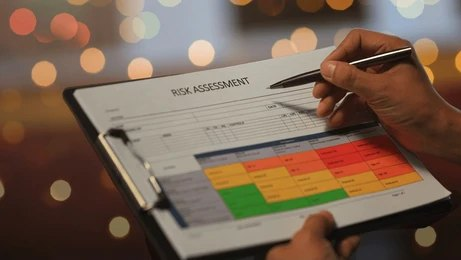
A Risk Manager identifies, evaluates, and mitigates organizational threats to protect strategic, financial, and operational assets. They design robust risk governance structures, monitor emerging corporate liabilities, and align institutional risk tolerance with executive growth objectives to build long-term corporate resilience.
Navigating modern corporate uncertainty requires specialized executive oversight to secure long-term financial stability and operational continuity. Today's dynamic business environments present complex operational threats that demand vigilant strategic control.
This blog explores the core responsibilities of a risk manager while highlighting essential professional credentials. You will discover how targeted certifications enhance organizational risk governance across modern commercial industries.
A skilled risk manager establishes comprehensive governance systems that protect valuable corporate assets and ensure strict regulatory adherence across all internal operational divisions.
Risk managers implement governance policies that define clear threat thresholds and assign direct accountability across corporate departments. They ensure every operational team functions strictly within pre-approved risk limits.
Here is the key role of a risk manager in governance control:
Evaluating daily business processes helps pinpoint systemic vulnerabilities before they evolve into severe financial or reputational disruptions. Risk professionals closely monitor operational risk management metrics to protect workplace productivity and business continuity.
So, here’s how a risk manager ensures robust operational security protocols across all core business units:
Implementing structured methodologies allows progressive organizations to address corporate uncertainty with consistent analytical rigor, operational clarity, and forward-looking strategic planning. Certified risk management frameworks protect vital corporate value across volatile international markets.
Utilizing standardized risk management frameworks provides clear, uniform guidelines that simplify threat classification across complex international business units. Standardized protocols ensure all corporate incident response strategies remain structured and fully repeatable.
Here’s how standardized risk architecture is implemented:
Embedding real-time threat intelligence into organizational planning ensures that ambitious corporate expansion initiatives never exceed pre-defined institutional safety parameters. Data-driven decisions preserve sustainable market valuation.
Here are some globally recognized strategic risk management frameworks and how they are applied in an organizational scenario.
| Framework Standard | Core Focus Area | Primary Organizational Application |
| ISO 31000:2018 | Universal risk governance & principles | Enterprise-wide strategic threat alignment |
| COSO ERM | Financial internal controls & strategy | Corporate governance & executive oversight |
| NIST SP 800-30 | Cyber & IT asset vulnerability | Digital risk management & infrastructure |
Table 1: Risk Management Framework Comparison
Specialized professional credentials demonstrate proven capability in managing high-stakes corporate uncertainty, complex regulatory compliance, and rapid enterprise crisis response scenarios.
In this regard, GIPMC introduces high-value certifications for professionals looking to enhance their careers in the field of enterprise risk management. Here are some of GIPMC’s advanced certifications that follow practical risk management curricula.
The ISO 31000 Lead Risk Manager Certification validates high-level expertise in establishing enterprise-wide risk governance systems. It prepares senior leaders to align institutional threat management directly with organizational strategies.
This certification helps in:
The Risk & Crisis Management Specialist (RCMS) credential focuses on practical scenario planning, rapid threat containment, and emergency response. It arms managers with skills to handle unexpected operational shocks.
It includes:
The ISO/IEC 27005 Lead Risk Manager Certification focuses on identifying, evaluating, and treating complex information security threats. It aligns modern digital security controls with organizational continuity objectives. It focuses on:
Earning specialized risk credentials strengthens professional authority, expands leadership capabilities, and accelerates career growth within governance, compliance, and risk sectors.
This table shows how different certifications help individuals qualify for top executive roles.
| Certification Track | Primary Focus Area | Target Executive Roles |
| ISO 31000 Lead Risk Manager | Enterprise governance & strategy alignment | Chief Risk Officer, Enterprise Risk Director |
| Risk & Crisis Management Specialist (RCMS) | Crisis response & business continuity | Business Continuity & Resilience Manager |
| ISO/IEC 27005 Lead Risk Manager | Information security threat assessment | Information Security Risk Officer |
Table 2: Different Risk Management Certifications and the Targeted Executive Roles
Modern organizations actively seek certified leaders who can convert complex threat metrics into actionable executive decisions. Professionals with specialized training drive sustained operational endurance across competitive markets.
Key competencies of a risk manager include:
Highly regulated commercial sectors require certified specialists to ensure strict adherence to changing corporate compliance standards. Certified risk managers provide immediate operational confidence to internal stakeholders.
Applying customized risk management frameworks across corporate operations ensures consistent protection. Leaders who master operational risk management mitigate workflow failures, while a structured enterprise risk management strategy secures long-term market position and executive continuity.
Financial institutions rely on comprehensive enterprise risk management procedures to safeguard capital assets against volatile market fluctuations. Systematic risk tracking preserves organizational liquidity, protects capital reserves, and boosts investor confidence.
Working with certified professionals trained through GIPMC allows companies to build bulletproof threat models. Experienced risk officers maintain complete oversight while ensuring compliance with stringent global regulatory guidelines.
Here is how they can help:
Technology enterprises deploy specialized governance frameworks to defend critical IT networks against unexpected cyberattacks and system downtime. Secure digital systems maintain customer trust globally.
Risk managers can help by:
Mastering structured risk management strengthens enterprise resilience, safeguards core organizational assets, and equips professionals with the necessary skills for executive governance leadership.
Ready to lead enterprise resilience? Enrol in GIPMC programs today to master global risk frameworks and advance your executive career with internationally accredited professional credentials. Contact us now for more details on the certifications.
A risk manager proactively identifies and mitigates future operational threats, whereas an internal compliance auditor primarily verifies past adherence to established regulatory rules and internal corporate policies.
Most entry positions require a bachelor's degree in business, finance, or computer science, followed by specialized professional risk certifications to validate advanced governance expertise.
Scenario planning allows risk managers to simulate extreme market disruptions or technical failures, enabling organizations to test response protocols before real operational crises actually occur.
Yes, non-profit institutions utilize risk protocols to safeguard funding sources, protect public reputation, ensure regulatory compliance, and maintain uninterrupted community service delivery during disruptions.
Organizations should update their risk register continuously, with formal executive reviews conducted quarterly or immediately following significant structural, operational, or regulatory shifts within the market.