An ITSM professional is responsible for delivering reliable and efficient technology services aligned with their organization’s business objectives. Hence, if you’re looking to build a stronger career in modern IT operations, you must have a solid understanding of the roles, skills, and certifications behind IT service management before you make any career-defining move.
Simply maintaining operational systems is not enough when every business function within an organization is dependent on technology. Modern enterprises seek professionals who can improve service quality and manage user expectations, alongside controlling operational risks and connecting IT performance with business goals.
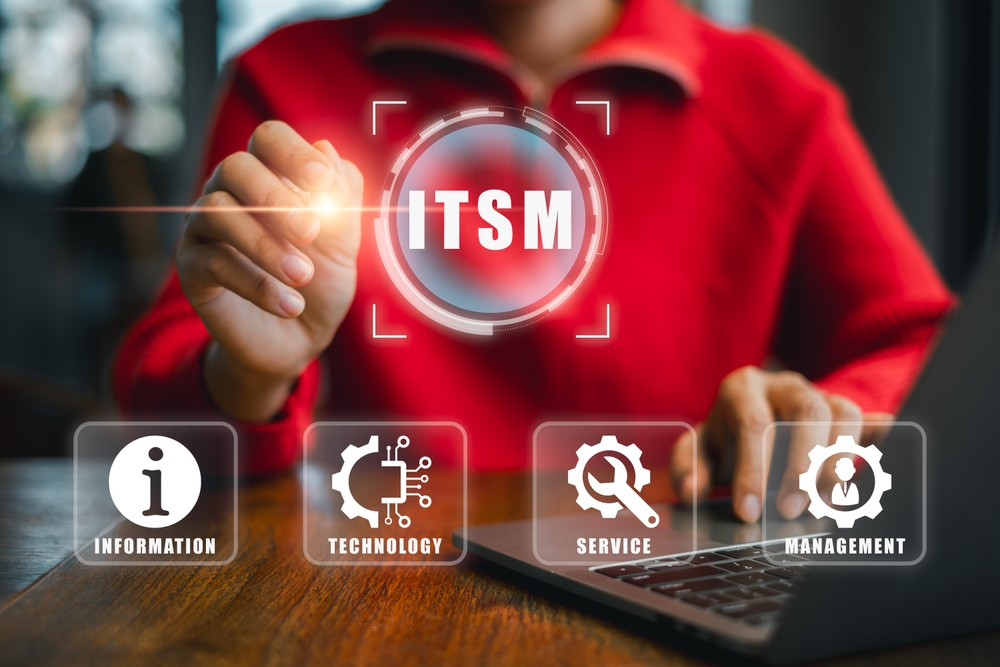
If you have ever asked “what is ITSM?”, the simplest answer is that IT Service Management covers the practices that organizations use to plan, deliver, support, monitor, and improve IT services.
As an ITSM professional, you must apply these principles to make technology services more reliable and useful for the people in your organization who depend on them.
However, your role can often vary significantly from that of an ITSM professional in another organization, depending on your key functions and responsibilities. Depending on your position, you may be responsible for handling:
The key functions within your organization and the business objectives will determine your key responsibilities as the ITSM professional.
If your organization is facing technology problems, they are unlikely to remain contained and isolated within the IT department. For example, a simple service outage can affect multiple departments, including sales, employees, customers, production, or compliance.
Hence, as an ITSM service management professional, you will need to focus on a lot more than basic technical troubleshooting. You must create structured ways to manage key services and functions within the organization throughout the lifecycle, while keeping business and user needs in mind.
For example, you may have to investigate recurring incidents to identify the root cause instead of repeatedly fixing the same symptoms. You may also be responsible for reviewing service-level performance, identifying process weaknesses, coordinating improvements, and communicating operational issues to business stakeholders.
A strong ITSM professional needs a combination of technical awareness and business-facing skills. Your core skill requirements will include:
These skills will become increasingly important as you move from technical execution toward service ownership and management.
If you find yourself wondering “what is IT service management?”, the answer will become clear when you look at the roles that you can pursue once you have the necessary credentials and skills.
An ITSM career does not lead to one fixed job title. Your responsibilities can change depending on the kind of skills and experience you possess, the organization you work for, and your specialization. Prominent ITSM roles include:
| ITSM Role | Main Responsibility | Skills You Need | When It Fits |
| Service Desk Manager | Manage support operations and user experience | Leadership, incident management, communication | Moving beyond frontline support |
| IT Service Manager | Own service performance and delivery | ITSM processes, KPIs, stakeholder management | Managing end-to-end IT services |
| IT Operations Manager | Oversee reliable technology operations | Operations, risk, problem-solving | Leading technical operations |
| IT Governance Manager | Monitor controls, policies, and compliance | Governance, risk, reporting | Regulated or complex environments |
| ITSM Consultant | Help organizations improve service practices | Frameworks, analysis, communication | Advisory and transformation careers |
Table 1: ITSM Roles Connect Service Expertise With Different Career Responsibilities
Hence, your career path can develop in several directions. You may choose to begin in service desk operations, but you can definitely progress into ITSM service management with the necessary skills and credentials. Alternatively, with the right experience in technology, you can also move into governance, consulting, or IT leadership.
The key is to identify whether you want to deepen your service-management expertise or combine it with broader technology and leadership capabilities. This will help you choose the right ITSM roles you can progress to and the perfect approach that will get you there.
An ITSM certification can give you a structured way to validate or demonstrate your knowledge of service-management principles and standards to potential hirers. It will inform hiring managers and employers that you possess the knowledge, skills, and experience to handle the high-responsibility requirements of top-tier leadership positions within their organizations.
However, you must only opt for certifications that support your career direction instead of simply adding another credential to your resume. GIPMC currently offers certification options that can support different stages of your ITSM career, from foundational service management to auditing, technology expertise, and IT leadership.
| GIPMC Certification | Primary Focus | Best Fit | Career Value |
| ISO 20000 ITSM Foundation | IT service management and ISO/IEC 20000 principles | IT service and support professionals | Builds structured ITSM knowledge |
| ISO/IEC 20000-1:2018 Lead Auditor | ITSM system auditing and governance | ITSM, audit, risk, and compliance professionals | Develops audit and assurance capability |
| IT Technology Expert (ITTE) | Core IT technologies, systems, troubleshooting, and reliability | Technical IT professionals | Strengthens technical depth alongside service knowledge |
| IT Management Leadership Professional (ITMLP) | IT leadership, strategy, governance, and operations | IT managers and aspiring leaders | Expands service expertise into leadership |
| Software Management Associate (SMA) | Software delivery, coordination, quality, and business-technical collaboration | IT and software operations professionals | Builds broader technology-management capability |
Table 2: GIPMC Certifications That Support Different ITSM Career Stages and Directions
There are multiple other certifications that you can explore to help you obtain the necessary credentials for your desired ITSM role(s). You can connect with our certification specialists to identify your desired job roles, determine the correct certification pathway that’ll get you there, and design the best approach to get your certification on time.
The right certification path for you will depend largely on the responsibilities you want to take on next. Before you select a certification program, you should ask yourself the following questions. This will help you take the right action to get the desired credentials.
You should start with a foundation that helps you develop structured knowledge of ITSM practices and standards. An ITSM certification focused specifically on service management will make sense when you want to strengthen your existing service or support role.
You should opt for a certification that is focused on ISO/IEC 20000 auditing, as it will better match your goals. This direction suits professionals who enjoy functions that involve controls, evidence, risk management, assessments, and organizational assurance.
You need to broaden your capabilities beyond service processes. You must opt for a certification program that helps you build and sharpen your skills for leadership, business alignment, resource planning, governance, stakeholder communication, and performance management.
You must opt for a certification path that helps you to combine service-management knowledge with your technical capabilities. You must understand infrastructure, systems, troubleshooting, and reliability to ensure better and more effective communication with technical teams.
You must look beyond traditional service desk responsibilities and explore certification programs in software delivery, business-technology coordination, project delivery, governance, and transformation. These certifications will definitely help you expand your career options.
This is where ITSM service management becomes a career foundation instead of simply acting as a collection of operational processes. You can use your ITSM skills as a core capability and then build adjacent expertise around your desired role.
Pro Tip: Choose your certification based on the responsibility you want next, not only the title you hold today.
As an ITSM professional, you need to have a proper understanding of what does ITSM stand for in technology. This will help you understand the full scope of your responsibilities, which includes a lot more than responding to technical problems. You will help organizations create reliable technology-focused solutions for their business operations, improve internal processes, manage risks across departments, support end-users, and connect technology performance with business priorities.
If you are still confused about which ITSM certification is right for you, you should start your consideration/comparison with the role you want to perform next. This will help you identify gaps in your current capabilities and the training and credentials that will enable you to strengthen the specific capabilities that role demands.
With GIPMC’s certification portfolio, you can access several routes to develop your service-management knowledge, technical depth, auditing capability, or broader IT leadership skills.
Connect with our certification consultants today to identify the appropriate ITSM certification or complementary GIPMC credential to close specific skill gaps between your current role and your target position.
Yes, you can. Since ITSM focuses heavily on process management, communication, incident coordination, and business alignment, professionals with project management, operations, or customer service backgrounds can successfully transition by obtaining foundational service management credentials.
While a degree in Information Technology, Computer Science, or Business Administration is preferred by many corporate recruiters, you can also combine relevant hands-on experience with recognized professional certifications to serve as an equivalent qualifier for many mid-level roles in US organizations.
Yes, they are. Every GIPMC certification pathway is aligned with international ISO standards (such as ISO 20000 and ISO 9001 quality management) and is recognized globally across corporate enterprise, consulting, and government contracting environments.
Most certification programs are structured for working professionals and can be completed within 3 to 6 weeks of self-paced study and scenario-based training before taking the official exam.
An IT Operations Manager focuses internally on keeping infrastructure, servers, and networks running reliably. On the other hand, an IT Service Manager focuses on the end-to-end delivery of value to the customer or business user, ensuring services meet agreed-upon Service Level Agreements (SLAs).