The right digital marketing skills can strengthen brand promotion campaigns, provide job-ready capabilities, and support career growth for professionals. Individuals must learn which skills needed for digital marketing deserve professional certification in digital marketing and how GIPMC credentials can fit their career path to boost their career prospects.
The digital marketing landscape is rapidly changing, but employers still need professionals who can combine channel knowledge with strategy, creativity, analytics, and measurable results. Once you can identify the skills needed for digital marketing, you can choose the right professional certification in digital marketing that will strengthen your profile instead of collecting credentials without direction.
To build a strong digital marketing career, you need more than knowledge of current social media activity. You should have a good understanding of how customers travel through brand discovery, offer evaluation, content engagement, and conversion. This will help you master the key digital marketing skills in four different areas, including:
These areas show why the skills needed for digital marketing extend beyond one social media platform. As a social media marketer, you need to be adept at connecting channels across platforms to business goals. This will help you contribute more effectively to planning and optimization for your clients.
Your certification choices should match the roles you wish to apply for and the work you want to perform. For example, a content specialist does not need the same credential mix as a performance marketer or strategy consultant. Hence, the key digital marketing hard skills for specialist roles include:
Strategy connects audience needs, channels, messaging, budgets, and performance goals. Strong digital marketing specialist skills will help you understand how marketing campaigns can support acquisition, engagement, and retention.
You should know how to perform key functions such as interpreting campaign metrics, identifying useful KPIs, comparing results of individual marketing activities, and turning market research data into better brand marketing decisions. These are important digital marketing hard skills, as they will help you identify which marketing strategies worked and what should change next.
SEO and content remain important foundations for organic visibility on digital marketing platforms. You need to understand key concepts such as search intent, content planning, audience research, keyword targeting, and how useful content supports customer journeys. These digital marketing specialist skills can be especially valuable for helping you achieve organic growth, content, inbound marketing, and website optimization roles.
Paid media requires more than creating advertisements on the most popular digital platforms. You need to learn about audience targeting, campaign objectives, budget allocation, conversion measurement, testing, and optimization. These skills needed for digital marketing will help you evaluate whether campaigns can contribute to meaningful outcomes instead of simply generating clicks.
Brand positioning, value propositions, customer research, and messaging are useful digital marketing specialist skills because they will help you build campaigns that can perform better due to their relevant messaging and consistency.
The strongest professional certificate in digital marketing will help you build and validate skills that cover important functions such as market analysis, customer strategy, value proposition design, go-to-market planning, demand generation, performance metrics, and digital enablement. If you’re a professional looking to connect marketing execution with broader growth strategy, a professional certification can be the ideal boost your career needs.
GIPMC currently offers a diverse portfolio of accredited certifications to aspiring, intermediate, professional, and expert digital marketing specialists. The top GIPMC credentials that you can consider are:
| GIPMC certification | Skill area supported | Best fit for |
| Digital Marketing Excellence Professional (DMEP) | Digital campaign strategy and execution | Broad digital marketing development |
| Sales & Marketing Strategy Consultant (SMSC) | Market analysis, GTM, demand generation, analytics | Strategy and growth professionals |
| AI Literacy & Awareness Certification (AILA) | Practical AI understanding | Marketers adding AI fluency |
| Prompt Engineering Associate Certification (PEAC) | Prompt design and optimization | Marketers using generative AI |
| UX Architecture Specialist (UXAS) | User journey mapping, interface architecture, conversion-focused design, and digital touchpoint optimization. | UX/UI Designers, Digital Product Marketers, Web Strategists. |
| Business Analysis Foundation Specialist (BAFS) | Requirement gathering, process mapping, business problem definition, and stakeholder communication. | Digital Analysts, Marketing Operations Leads, Product Specialists. |
Table: GIPMC Certifications Can Align Marketing Skills With Career Goals
Your choice of the digital marketing professional certificate will depend on what your current digital marketing role involves, which position you wish to apply for, and what skills you need to be eligible for that desired position.
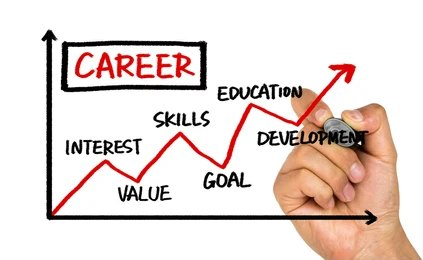
Your journey to choosing the right certification should start with identifying your target role, determining its required digital marketing skills, and selecting the credentials that can help you address your biggest skill gaps to achieve your desired role. You can use this mechanism to identify the best certification for your career growth.
A professional certification in digital marketing can be most useful for you when it validates capabilities you can demonstrate. A professional certificate in digital marketing should, therefore, support your career direction instead of replacing your practical experience.
Soft skills matter, but technical competence will give you the concrete capabilities that you can apply to your job functions and also demonstrate to potential hirers. If you’re trying to build a successful and diverse digital marketing career, you need to focus on useful digital marketing hard skills, including:
If you can demonstrate these capabilities to employers and hiring managers, it will significantly boost your chances of getting hired for specialized roles. As a digital marketing certified professional, you will need to showcase the skills to explain what a campaign did, why it performed the way it did, and how you could improve the current campaigns to produce better results going forward.
Also, your professional certification will work best if you can pair it with hands-on projects, measurable results, and continued learning. Becoming a certified digital marketing professional is not the finish line. It is merely a structured way to strengthen and validate your professional foundation.
The strongest digital marketing skills should be able to help you combine channel expertise, analytics, strategy, creativity, and emerging technology. These skills needed for digital marketing usually vary by role, so your certification path should also be based on the role you wish to achieve in digital marketing. Opting for generic certification will not help you achieve the career progression you desire.
With GIPMC, you will get multiple relevant certification pathways, including DMEP and SMSC, plus sales, marketing, and AI-focused options. These credentials will help you address the current gaps in your skills and eligibility, and support the role you want next.
Get in touch with us today to identify the perfect professional certification in digital marketing for your desired role and acquire target digital marketing skills to build a credible marketing profile.
Platform-specific certificates teach tool navigation for a single vendor (e.g., Meta or Google Ads). GIPMC credentials will offer you platform-neutral, strategic frameworks that validate transferable capabilities in campaign design, customer acquisition, data analysis, and business growth across any tool stack.
Yes. At GIPMC, our certification standards are aligned with global business and quality management frameworks (including ISO standards). This ensures that our credentials are recognized by multinational employers, agencies, and corporations across the US, UK, and global markets.
Yes. At GIPMC, we provide digital learning portals, study resources, and online assessments designed to accommodate working professionals and adult learners seeking flexible career development.
GIPMC professional credentials (such as the Digital Marketing Excellence Professional - DMEP) are valid for three (3) years from the award date. Renewal requires demonstrating ongoing professional development, practical experience, or continuing education in evolving marketing practices.
No. Certifications like the UX Architecture Specialist (UXAS) or Business Analysis Foundation Specialist (BAFS) focus on user journey mapping, behavioral analysis, and process design rather than writing complex code.