Struggling to move past day-to-day tasks or feeling stuck in your current role despite endless workshops? If you think training is enough, you are wrong. You will need certified development procedures as well! While training solves today's immediate skill gaps, true career growth requires long-term development. GIPMC certifications bridge this gap, transforming routine knowledge into strategic, leadership-ready capabilities.
Most professionals use the terms “training” and “development” interchangeably, but in the world of HR and career growth, they have fundamentally different meanings. Training addresses the skills you need today. Development builds the capabilities you need for tomorrow. Understanding this distinction between training and development is important, regardless of whether you are an HR leader or a professional choosing your next certification.
Training is a structured, short-term process designed to equip employees with the specific knowledge or skills needed to perform their current job roles effectively. It is job-specific, outcome-focused, time-bound, and employer-initiated. Here’s what its characteristics include:
Development is a long-term, holistic process aimed at expanding an employee’s capabilities beyond their current job roles. It prepares them for future responsibilities, career advancements, and leadership positions. This one is employee-centric, continuous, strategic, and growth-oriented. Considering the characteristics:
To understand the training and development difference, let’s try seeing from a realistic point of view.
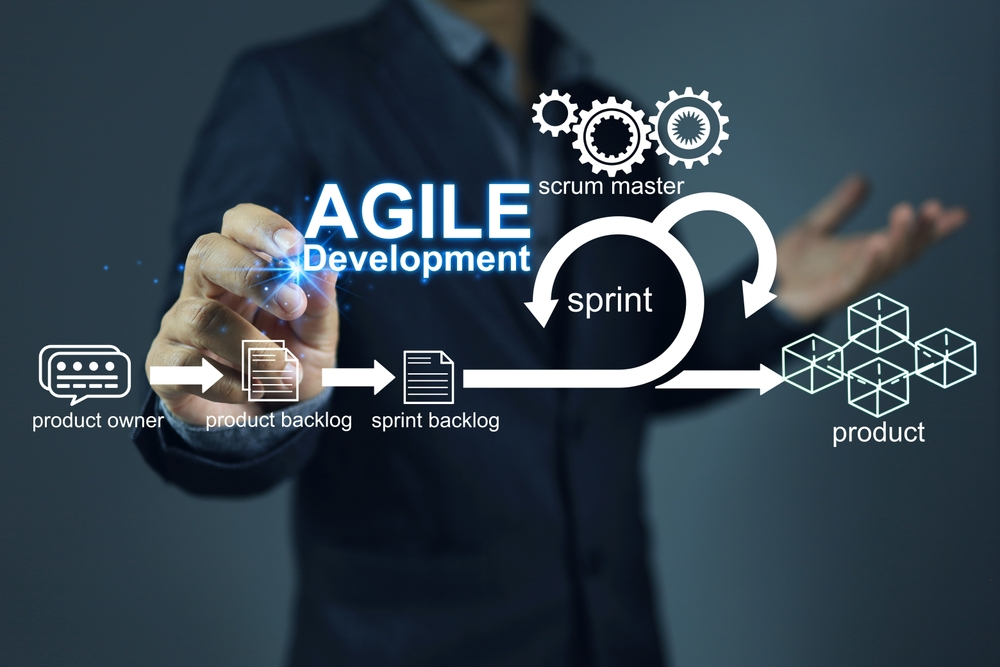
Suppose you are a software engineer or working in a similar role at a mid-sized IT firm. You were promoted to project lead after three years in a technical role. Your company then enrolled you in a two-day agile methodology training workshop so that you can manage sprint cycles.
However, after the workshop, you find out that
This is where you will need development, not training.
Alternatively, if you enroll in GIPMC’s Project Management Certification (PMC), it will validate both your new skills and your readiness for a senior project director role within just 18 months!
Instead of one single workshop, if you continue receiving guidance and more tool demos, you will develop well.
While both of them aim to improve performance, we can differentiate training and development in terms of purpose and impact. The table below shows the points of distinction across eight dimensions.
| Dimension | Training | Development |
| Time Horizon | Short-term (days–weeks) | Long-term (months–years) |
| Primary Goal | Close current skill gaps | Build future capability |
| Focus | Job-specific tasks | Holistic career growth |
| Initiated by | Employer / Manager | Employee + Organization |
| Outcome Measure | Task performance, error rate | Promotion readiness, leadership KPIs |
| Format Examples | Workshops, e-learning, drills | Mentoring, coaching, certifications |
| Nature | Reactive (fills a gap) | Proactive (prepares for change) |
| Beneficiary | Current role | Employee + future roles |
| Certification Relevance | Role-specific credentials (e.g. safety) | Global professional certifications (e.g. PMP, PMC, GPDC) |
Table 1: Core Points of Difference - Training vs. Development
Let’s suppose you work as an HR generalist at a logistics company. Your employer sends you and four colleagues to a one-day compliance training session on a training for labor law updates. Without issues, you pass the assessment and receive a certificate of attendance.
Then, a year later, if you suddenly plan to move into a regional HR Director role, your compliance certificate might help with current tasks. But you will not have any strategic leadership capability to hire managers yourself.
Contrarily, if you independently pursue GIPMC's Certified Associate Project Leader (CAPL) credential, you get a language-neutral, internationally recognizable credential that communicates long-term leadership potential.
The training will update your knowledge. The development will reposition your career. This is the difference between employee development and training. The credential will serve as a bridge that training alone can never provide.
Whether you are entering a new role, managing a team, or positioning yourself for executive leadership, the right certification accelerates the shift from training to development. The table below maps the GIPMC credentials that will help you in each stage of your professional journey.
| Career Stage | Recommended Training Path | Recommended Development Path | GIPMC Certification Fit |
| Entry-Level | Role onboarding, compliance, and technical tools | Mentoring, personal productivity programs | Project Management Certification (PMC) |
| Mid-Level | Process improvement, advanced software | Leadership seminars, cross-functional projects | Certified Associate Project Leader (CAPL) |
| Senior/Manager | Change management modules, regulatory updates | Executive coaching, succession programs | Global Project Director Credential (GPDC) |
| L&D Specialist/HR | Instructional design, LMS administration | Organizational development strategy | ISO 21500 Lead Project Manager Certification |
| Independent Professional | Domain-specific technical refreshers | Thought leadership, global certification | Multiple GIPMC credentials (stacking strategy) |
Table 2: GIPMC Certification Pathway by Career Stage
Training gives you the skills to succeed, and development gives you the perspective, credentials, and strategic capability. If you are someone who wants to accelerate your career, a professional certification from trusted agencies like GIPMC is what you need.
Our certifications cover both areas because both training and development in an organization are important. Get your required credentials that support your roles from project management to executive-level director. Enroll in your chosen program now!
Organizations should use a 70-20-10 budget split, allocating the majority to on-the-job training and smaller portions to high-impact developmental coaching or global certifications.
Yes. Proactive professionals can self-fund independent certifications, seek external industry mentors, and leverage open-source projects to build long-term leadership capabilities outside of work.
AI personalizes training by instantly identifying immediate skill gaps; while mapping out predictive development pathways tailored to an individual’s long-term career progression.
Unlike training's immediate test scores, development ROI is measured through long-term metrics like internal promotion rates, succession pipeline strength, and reduced executive turnover.
When learning initiatives are linked to organizational objectives, employees gain skills that directly support business growth. This improves workforce performance, strengthens future leadership pipelines, and ensures training and development investments deliver measurable value.