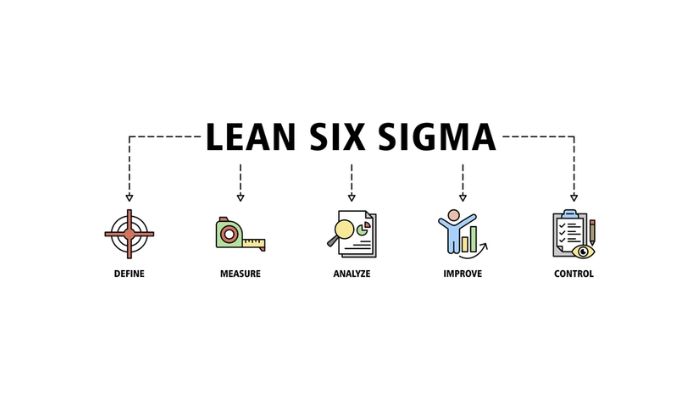
The Lean Six Sigma career path moves through four structured levels. These are Yellow Belt, Green Belt, Black Belt, and Master Black Belt. Each level builds on the previous one, expanding your skills, responsibilities, and earning potential in process improvement certification 2026 and beyond.
Continuous improvement is a smart career choice for anyone who wants to stay in demand. This gives a push in one’s career and helps professionals achieve better heights.
The best part is that many organizations are looking for people who can cut waste, enhance processes, and deliver clear results. So, if you manage to opt for the right path for improvement, then you can secure a good role in industries like manufacturing, healthcare, finance, and services.
But the path is not always clear. Many professionals are unsure where to start, how long each level takes, or which credential is right for their current role. Well, we propose the Lean Six Sigma career path as a great option. Valued at USD 1.3 billion in 2025, the Lean Six Sigma services market is on track to more than double, reaching USD 2.8 billion by 2035 with a steady 8% annual growth rate. Our blog will lay it all out for you. From first steps to executive-level strategy, we will focus on all of it.
The Lean Six Sigma certification levels follow a belt system. This perfectly mirrors progression in both skill and responsibility. Each belt is more than a step in a course; it is a separate path. If numbers are to be believed, then organizations that properly implement Lean Six Sigma frameworks experience an average 40% increase in operational capacity without adding overhead costs.
Here is what you need to know:
| Belt Level | Focus Area | Ideal For |
| Yellow Belt | Awareness and foundational tools | Entry-level professionals and support staff |
| Green Belt | Practical project execution | Team leads and process owners |
| Black Belt | Advanced problem-solving and project leadership | Operations managers and analysts |
| Master Black Belt | Enterprise strategy and transformation | Senior leaders and executive consultants |
Table: Different belt levels and their focus area
Each level demands deeper knowledge, broader scope, and more strategic thinking than the one before it.
The Yellow Belt is the starting point in the Lean Six Sigma career path. This is designed to introduce the core principles of Lean thinking, waste identification, and team-based improvement.
This level helps the professionals learn to:
The Yellow Belt actively prepares professionals to participate in improvement projects and work alongside Green and Black Belt leaders.
Who should pursue it?
Individuals who should choose this Lean Six Sigma online certification are:
Learn more about GIPMC’s Lean Yellow Credential (LYC) Certification.
The Green Belt teaches you how you can lead projects on the ground. This moves beyond awareness into hands-on project leadership. This is where the Six Sigma Yellow Belt vs Green Belt difference becomes most apparent. A Yellow Belt supports. A Green Belt leads.
Green Belt professionals are experienced in:
Who should pursue it?
The Lean Green Credential is suitable for the following professionals:
This level is of great value for those in healthcare, manufacturing, and financial services. So, if you are looking for Lean certification for healthcare and your industry involves structured project execution, then the Green Belt will be a great choice.
Learn more about GIPMC’s Lean Green Credential (LGC) Certification.
The Black Belt is designed around advanced problem-solving and project leadership. This is widely recognized, and it shows that you have mastered both Lean tools and Six Sigma methodology. This is what you need to know about Black Belt professionals:
Some of the major responsibilities at this level include:
Who should pursue it?
The Lean Black Practitioner tier is built for the following professionals:
Six Sigma Black Belt salary figures reflect this elevated responsibility. Industry reports are enough to prove that Black Belt professionals are placed among the higher earners in operations and process management roles. While a certified Green Belt averages roughly $116,000 to $128,005 annually in the U.S., scaling up to a Black Belt bumps average compensation to between $117,200 and $147,200, with top-tier Senior Black Belts clearing over $175,000.
Learn more about GIPMC’s Lean Black Practitioner (LBP) Certification.
The Lean Master Black Belt certification is an executive-level credential. This is designed for professionals who do more than just lead a project. This is for those who govern the entire improvement ecosystem of an organization. At this level, the focus shifts from individual projects to enterprise-wide transformation. Certified professionals at this tier are trusted with:
Who should pursue it?
The following are some of the professionals who can consider pursuing a Lean Master Black Strategist credential:
Basically, anyone who shapes how organizations perform at the highest level.
Learn more about GIPMC’s Lean Master Black Strategist (LMBS) Certification.
If you are planning to sit for the Lean Six Sigma exam, then it is a must that you understand the exam format at each level. This helps you with realistic planning, and here is how the credentials stack up:
| Credential | Duration | Questions | Passing Score |
| Lean Yellow Credential (LYC) | 90 minutes | 70 | 70% |
| Lean Green Credential (LGC) | 120 minutes | 90 | 70% |
| Lean Black Practitioner (LBP) | 180 minutes | 120 | 70% |
| Lean Master Black Strategist (LMBS) | 210 minutes | 150 | 70% |
Table: Exam Formats of Different Certifications
All exams are delivered online in a proctored format with scenario-based questions. The structure tests real-world application and theoretical recall, both at the same time.
This is one of the most common questions professionals ask before enrolling. The answer depends on your pace of study. However, in general, this is how long it takes:
For those pursuing a Lean Six Sigma online certification, self-paced formats allow professionals to study without disrupting their current roles. This makes the learning accessible regardless of geography or work schedule.
Continuous improvement certification is of high value in every major industry. But some of the sectors that are in high demand are:
Choosing the right level is not just about experience. It is about where you want to go. So, this is what you need to understand.
The most effective Lean Six Sigma career path in 2026 is built one belt at a time. So, focus on creating a foundation before moving on to the next.
Certified process improvement professionals are always in demand. So, if you want to unlock the same opportunities, then start with a structured certification path. Irrespective of where you are on your career ladder, this will give you the tools, credibility, and career positioning that will help you stand out. So, skip wasting your time and explore the full range of Lean Six Sigma certification levels at the Global Institute of Professional Management Certification (GIPMC). Take the next step in your process improvement certification 2026 journey today.
Yes, it is. Organizations across the world are hiring certified professionals. So, this certification will give you a chance to unlock great opportunities.
Yes, absolutely. Self-paced online programs are great for professionals. This allows people like you to study on your own schedule without disrupting your current roles.
Yes, it does. The majority of our credentials are valid for three years. After that, they require renewal through continuing professional development or a renewal assessment.
If you do not meet the 70% passing threshold on your first try, you are permitted to retake the exam.
A step-by-step approach is best for building a strong understanding. But if you are an experienced professional in project management or process improvement, then you can skip to higher-level certifications based on your background.