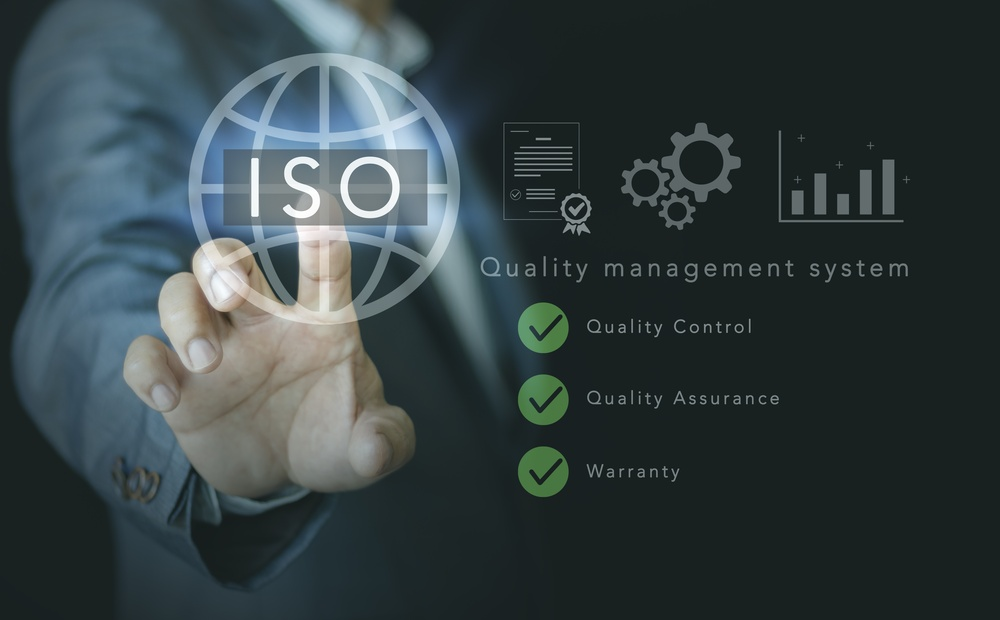
Without ISO-aligned credentials, even your experience as a quality manager can be nullified. Considering how most global multinational companies now demand ISO certified stakeholders, a quality manager with necessary certifications will be in high demand to employers. This can lead to higher employability and increased leverage for salary negotiation.
More than 1 million organizations in 189 countries are certified to ISO 9001 alone, making it the top-quality management standard in the world. Moreover, 95% of major multinational companies need their suppliers to hold at least one ISO certification.
Now, you might be a quality manager or aspiring to be one. But without any quality management certifications that meet industrial ISO credentials, you are practically invisible in the global job market. So, this blog will list 7 ISO certifications that can make your resume suitable for the respective ISO standards.
Here are the 7 ISO certification programs that organizations follow, which quality managers should be able to meet through the respective quality management certifications.
The undisputed gold standard of quality management, hiring managers in manufacturing, healthcare, services, and government all list ISO 9001 knowledge as a basic requirement. As a quality manager, getting certified in this standard means that you can design, implement, and audit a QMS from the ground up.
Consider getting the ISO 9001:2015 Lead Auditor Certification alongside the Lead Implementer Certification. The first one equips you to audit and verify quality management systems as per the ISO 9001 requirements. The second one is suitable for professionals who are building a QMS from scratch.
Trusted by over 670,000 certified organizations worldwide, ISO 14001 is the most prioritized standard for managing environmental responsibilities, improving performance, and ensuring long-term resilience. Quality managers who understand environmental compliance are now considered more valuable in the energy, manufacturing, public sector, and construction industries.
Get the ISO 14001 Lead Auditor Certification that will train you to lead environmental management system audits for sustainable and compliant organizations. It will also help you to understand and recognize professional-level competence in auditing Environmental Management Systems (EMS) as per ISO 14001.
You can also consider combining it with the Continuous Improvement Strategy Manager (CISM) certification that covers sustainability-integrated process excellence and efficiency, complementing ISO 14001 implementation abilities.
Most studies have shown that the adoption of ISO 45001:2018 has reduced workplace accidents globally. While it depends on how well the principles are implemented, quality managers now also need to supervise health and safety at workplaces. In regions like the GCC and the EU, where regulatory compliance is strict, this certification will differentiate your capabilities in the broader talent pool.
If you apply for the ISO 45001:2018 Lead Auditor Certification, you can achieve professional-level capabilities in auditing Occupational Health and Safety Management Systems (OHSMS) as per the ISO standard.
You can also get the Risk & Crisis Management Specialist (RCMS) certification to cover risk identification, workplace hazard management, and crisis protocols. This will make you competent in applying a risk-based approach.
The medical devices sector is one of the most regulated areas for quality managers and also the best-paying one! To stand out from the competition, ISO 13485:2016 is mandatory for quality managers in pharmaceuticals, medical device manufacturing, and life sciences, specifically in the US, EU, and Southeast Asia.
By signing up for the ISO 13485:2016 Lead Auditor Certification, you get professional standard competence in handling quality management systems (QMS). Applicable for organizations that design, develop, manufacture, install, and service medical devices and regulated pharmaceutical products.
ISO 22000:2018 certification is known to ensure better asset turnover and return on capital employed for food sector enterprises. Furthermore, it also became non-negotiable for food businesses after the pandemic. This certification is essential for quality managers in food processing, food distribution, retail, and hospitality in booming food export industries like India, Southeast Asia, Africa, and the United States.
You should consider getting the ISO 22000:2018 Lead Auditor Certification to know how to professionally manage and audit Food Safety Management Systems (FSMS). This certification covers hazard-based thinking, regulatory compliance, prerequisite programs (PRPs), risk management, HACCP principles, and leadership accountability.
In Europe and North America, ISO 27001 compliance is now required by 70% of IT providers. Since quality management majorly works in an integrated manner with data governance, managers in tech (healthtech/fintech) who hold this certification negotiate a significant salary premium.
Apply for the ISO/IEC 27001:2022 Lead Auditor Certification to be able to handle Information Security Management Systems (ISMS) in complex and high-risk organizational environments. Combine it with Quality Management Director (QMD) certification to enhance governance and strategic quality leadership capabilities needed for ISO 27001 compliance.
This is the newest and most future-proof ISO standard that governs AI systems. As organizations are now more dependent on AI-integrated processes, quality managers should be able to ensure that AI outputs are trustworthy, compliant, and auditable, and this certification becomes essential.
To stay ahead of the curve, sign up for the ISO/IEC 42001 Lead Auditor Certification (AI Management Systems). It will help you lead AI management systems audits, keeping trust, ethics, and global standards in check. This will position you as a quality manager with advanced AI governance leadership.
Quality managers who hold credentials that match multiple ISO disciplines relevant to their industries are the ones who rise faster in their careers. Because ISO certification programs not only ensure quality in processes, but also in the environment, safety, data, and now AI.
Your resume can act as a compliance document of your career. So, get certifications that, when included in your resume, can help you meet the highest international quality standards!
Most Lead Auditor courses require only 5 days of intensive training and end with a final examination that is needed to achieve full certification.
Many accredited providers, like GIPMC, offer virtual instructor-led training and remote proctored exams, allowing you to get certified from any location.
Certificates generally remain valid for three years, after which you must attend transition training or simply renew the certification to maintain your credentials.
While not always mandatory, having foundational knowledge of the specific ISO standard and, if possible, a bit of auditing experience is highly recommended.
Costs vary by region and provider, but expect to invest between $300 and $1000 for one Lead Auditor certification course.