Course Description
Protect Digital Assets, Mitigate Cyber Risks, and Strengthen Security Operations
The Cyber Security Professional (CSP-G) certification is a professional credential designed to validate core and advanced competencies in cybersecurity operations, threat mitigation, and security best practices. It equips professionals with the technical knowledge, analytical skills, and operational awareness required to protect systems, networks, applications, and data in modern digital environments.
CSP-G focuses on practical cybersecurity implementation, enabling professionals to detect threats, apply security controls, and support organizational cyber resilience across on-premises, cloud, and hybrid environments.
Why Cyber Security Professional (CSP-G) from GIPMC?
The CSP-G certification is built to be globally relevant, technology-neutral, and practice-oriented, allowing professionals to apply cybersecurity principles across diverse platforms, tools, and organizational contexts without reliance on specific vendors or proprietary frameworks.
Key Advantages
- Globally applicable cybersecurity competency framework
- Balanced coverage of technical controls, risk awareness, and operations
- Practical, scenario-driven learning approach
- Alignment with modern security operations and DevSecOps practices
- Career-focused credential for cybersecurity practitioners
CSP-G supports professionals responsible for implementing, operating, and maintaining cybersecurity controls.
Market Relevance
- Cybersecurity skills are critical across all industries
- Organizations seek professionals who can apply security controls effectively
- Cyber incidents continue to drive demand for skilled security practitioners
- Certified cybersecurity professionals support stronger security postures
(Based on aggregated cybersecurity workforce and threat landscape trends.)
As digital transformation expands, skilled cybersecurity professionals are essential to protect organizational assets.
Who Should Pursue CSP-G? (Target Audience)
The Cyber Security Professional (CSP-G) certification is suitable for professionals involved in hands-on cybersecurity and IT security roles, including:
- Cyber Security Analysts and Engineers
- SOC Analysts and Incident Response Team Members
- Network and Systems Security Professionals
- Application and Cloud Security Practitioners
- IT Administrators with security responsibilities
- DevOps professionals supporting secure delivery
- IT professionals transitioning into cybersecurity roles
CSP-G provides a structured pathway to professional-level cybersecurity competence.
Detailed Learning Outcomes
By earning the Cyber Security Professional (CSP-G), candidates demonstrate competencies consistent with a CAPM project management certification, including the ability to:
1. Cybersecurity Foundations
- Core security principles and objectives
- Understanding threats, vulnerabilities, and risks
- Security roles and responsibilities
2. Network & Infrastructure Security
- Network security concepts and controls
- Firewalls, segmentation, and monitoring
- Securing on-premises and cloud infrastructure
3. System & Endpoint Security
- Operating system security fundamentals
- Endpoint protection and hardening
- Patch and configuration management
4. Identity & Access Management
- Authentication and authorization concepts
- Access control models
- Privileged access management basics
5. Application Security Fundamentals
- Secure application design principles
- Common application vulnerabilities
- Secure development awareness
6. Cloud Security Basics
- Cloud security shared responsibility
- Securing cloud services and workloads
- Identity, network, and data protection in the cloud
7. Security Monitoring & Detection
- Security logging and monitoring concepts
- Threat detection and alert handling
- Security operations workflows
8. Incident Response & Handling
- Incident identification and classification
- Containment, eradication, and recovery
- Post-incident review and lessons learned
9. Vulnerability Management
- Vulnerability scanning and assessment
- Prioritization and remediation tracking
- Continuous vulnerability management
10. Data Protection & Privacy
- Data classification and protection methods
- Encryption and data loss prevention basics
- Privacy and data handling awareness
11. Security Policies & Compliance Awareness
- Security policies and standards
- Regulatory and compliance considerations
- Audit and documentation readiness
12. Risk Awareness & Secure Practices
- Identifying and managing security risks
- Secure operational practices
- Human factors and security awareness
13. Continuous Learning & Security Maturity
- Staying current with evolving threats
- Professional development in cybersecurity
- Supporting long-term security improvement
Professional and Career Benefits
CSP-G-certified professionals are recognized for their ability to:
- Implement and operate cybersecurity controls effectively
- Detect and respond to security threats
- Support secure IT and cloud environments
- Reduce organizational cyber risk
- Contribute to resilient security operations
The certification enhances credibility and opens opportunities in roles such as:
- Cyber Security Professional
- Security Analyst or Engineer
- SOC or Incident Response Analyst
- Network or Systems Security Specialist
- Application or Cloud Security Practitioner
- Cybersecurity Consultant
Certification Validity & Renewal
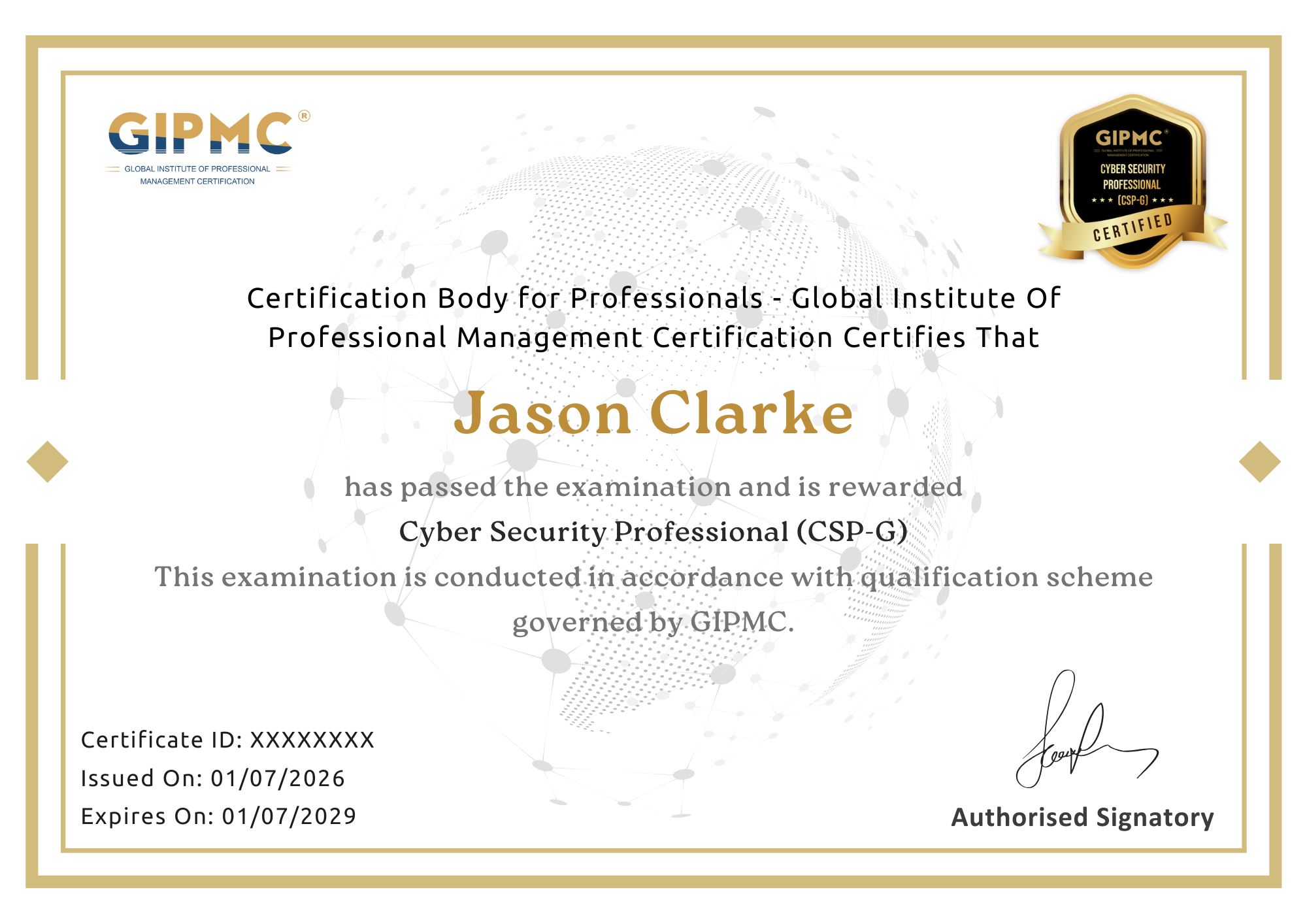
The Project Management Certification (PMC) issued by GIPMC is valid for three (3) years from the date of certification award.
Renewal is designed to:
- Maintain professional credibility
- Ensure continued alignment with modern project practices
- Protect the long-term value of the certification
Renewal Process Includes:
- Completion of defined continuing professional development or knowledge refresh requirements
- Successful renewal assessment or verification, as applicable
- Submission of renewal application before certification expiry
Timely renewal allows professionals to retain active certification status without interruption.