Professional Procurement Certification for Executing Efficient, Compliant, and Value-Driven Operations
Course Description
Executing Efficient, Compliant, and Value-Driven Procurement Operations
The Procurement Operations Professional (POP) certification is a professional credential designed to develop, validate, and recognize capability in executing and managing day-to-day procurement operations that support organizational performance, cost control, and supply continuity.
This certification prepares professionals to operate procurement processes across sourcing execution, purchasing, supplier coordination, contract administration, and compliance monitoring. It emphasizes operational discipline, policy adherence, process efficiency, supplier performance tracking, and collaboration with finance, operations, and supply chain teams.
POP goes beyond strategic sourcing concepts by equipping professionals with the practical execution skills and operational mindset required to ensure procurement delivery.
As a certified procurement manager certification, POP gives professionals a structured, recognized pathway into procurement execution and operations leadership roles.
What Makes Getting Certified With Procurement Manager Certification for Operations from GIPMC Ideal?
Organizations increasingly depend on procurement operations to manage cost pressures, supplier risks, and compliance obligations. POP is industry-agnostic, policy-aware, and execution-focused, enabling professionals to apply procurement best practices across public and private sector environments.
Key Advantages
- Operations-focused procurement credential
- Strong emphasis on execution, compliance, and control
- Applicable across goods, services, and indirect procurement
- Supports cost efficiency and supply continuity
- Career-oriented certification with real-world applicability
POP is designed for professionals operating at the procurement execution and operations level.
This makes POP a strong choice for professionals comparing options for a certified procurement manager certification grounded in day-to-day operational reality.
Market Relevance
As supply chains become more complex and cost-sensitive, skilled procurement operations professionals are in high demand.
- 30–45% reduction in procurement cycle times through structured procurement operations
- 65–80% employer preference for procurement professionals with formal operational procurement credentials
- 25–40% improvement in cost control and spend visibility through disciplined procurement execution
- 2x higher supplier reliability and on-time delivery performance under trained procurement operations teams
(Based on aggregated global procurement performance, supply chain resilience, and sourcing operations trends.)
These figures demonstrate why procurement operations capability is essential for organizational efficiency and resilience.
They also explain the growing demand among employers for candidates holding a certified procurement manager certification in operations execution.
Who Should Pursue Procurement Operations Professional (POP)?
The Procurement Operations Professional (POP) certification is suitable for professionals responsible for procurement execution and supplier coordination, including:
- Procurement and Purchasing Officers
- Buyers and Procurement Executives
- Supply Chain and Sourcing Support Professionals
- Contract and Vendor Management Staff
- Operations and Finance Procurement Coordinators
- Public Sector and Corporate Procurement Practitioners
- Professionals transitioning into procurement operations roles
Across industries, POP provides a structured framework for effective procurement execution.
For candidates researching a certified procurement manager certification, POP's operations-first, execution-based design is built to fit exactly this audience.
Detailed Learning Outcomes of Our POP Certification
By earning the Certified Procurement Manager Certification for Operations (POP), candidates get the chance to showcase that their competencies are consistent with a CPOP certification. This includes the ability to:
1. Fundamentals of Procurement Operations
- Role of procurement in organizational operations
- Difference between strategic sourcing and procurement execution
- Procurement lifecycle overview
2. Procurement Policies and Governance
- Procurement policies and procedures
- Delegation of authority and approvals
- Ensuring compliance and control
3. Purchase Requisition and Order Management
- Processing purchase requests
- Creating and managing purchase orders
- Ensuring accuracy and traceability
4. Supplier Selection and Onboarding Support
- Supporting supplier qualification processes
- Documentation and compliance checks
- Coordinating supplier onboarding
5. Contract Administration and Compliance
- Managing contract terms and obligations
- Monitoring compliance and milestones
- Supporting renewals and amendments
6. Pricing, Cost Control, and Spend Management
- Understanding pricing structures
- Monitoring spend against budgets
- Supporting cost efficiency
7. Supplier Performance and Relationship Support
- Tracking supplier delivery and quality performance
- Managing operational issues
- Supporting continuous improvement
8. Procurement Risk and Issue Management
- Identifying operational procurement risks
- Managing delays, shortages, and disputes
- Supporting mitigation actions
9. Inventory and Demand Coordination
- Coordinating procurement with inventory needs
- Supporting demand planning
- Preventing stockouts and excess
10. Documentation, Records, and Audit Readiness
- Maintaining procurement records
- Supporting internal and external audits
- Ensuring transparency and traceability
11. Use of Procurement Systems and Tools
- Procurement and ERP system awareness
- Data accuracy and system discipline
- Supporting reporting and analytics
12. Cross-Functional Collaboration
- Working with finance, operations, and logistics
- Managing internal stakeholder expectations
- Improving procurement responsiveness
13. Professional Practice and Procurement Operations Maturity
- Ethical procurement behavior
- Continuous improvement in procurement operations
- Preparing for advanced procurement roles
Procurement Operations Professional (POP) Scope Coverage
This program ensures complete coverage of core procurement operations domains, from purchasing execution and supplier coordination to contract administration and compliance monitoring. Candidates are fully trained to apply procurement principles across real operational contexts, making them completely ready to manage day-to-day procurement delivery and successfully earn a recognized certified procurement manager certification for their role.
Professional and Career Benefits of Certifying with POP
POP is structured as a certified procurement manager certification focused on operational execution. So, holders gain skills that translate directly into day-to-day procurement roles.
Procurement Operations Professional (POP) certified professionals are recognized for their ability to:
- Execute procurement activities efficiently and compliantly
- Improve purchasing cycle time and supplier reliability
- Strengthen cost control and spend transparency
- Support audit readiness and governance
- Contribute to resilient and effective supply chains
The certification supports career advancement into roles such as:
- Procurement Operations Professional
- Buyer or Senior Buyer
- Procurement Executive or Officer
- Contract and Vendor Management Specialist
- Supply Chain Operations Coordinator
- Procurement and Sourcing Manager
Certification Validity & Renewal
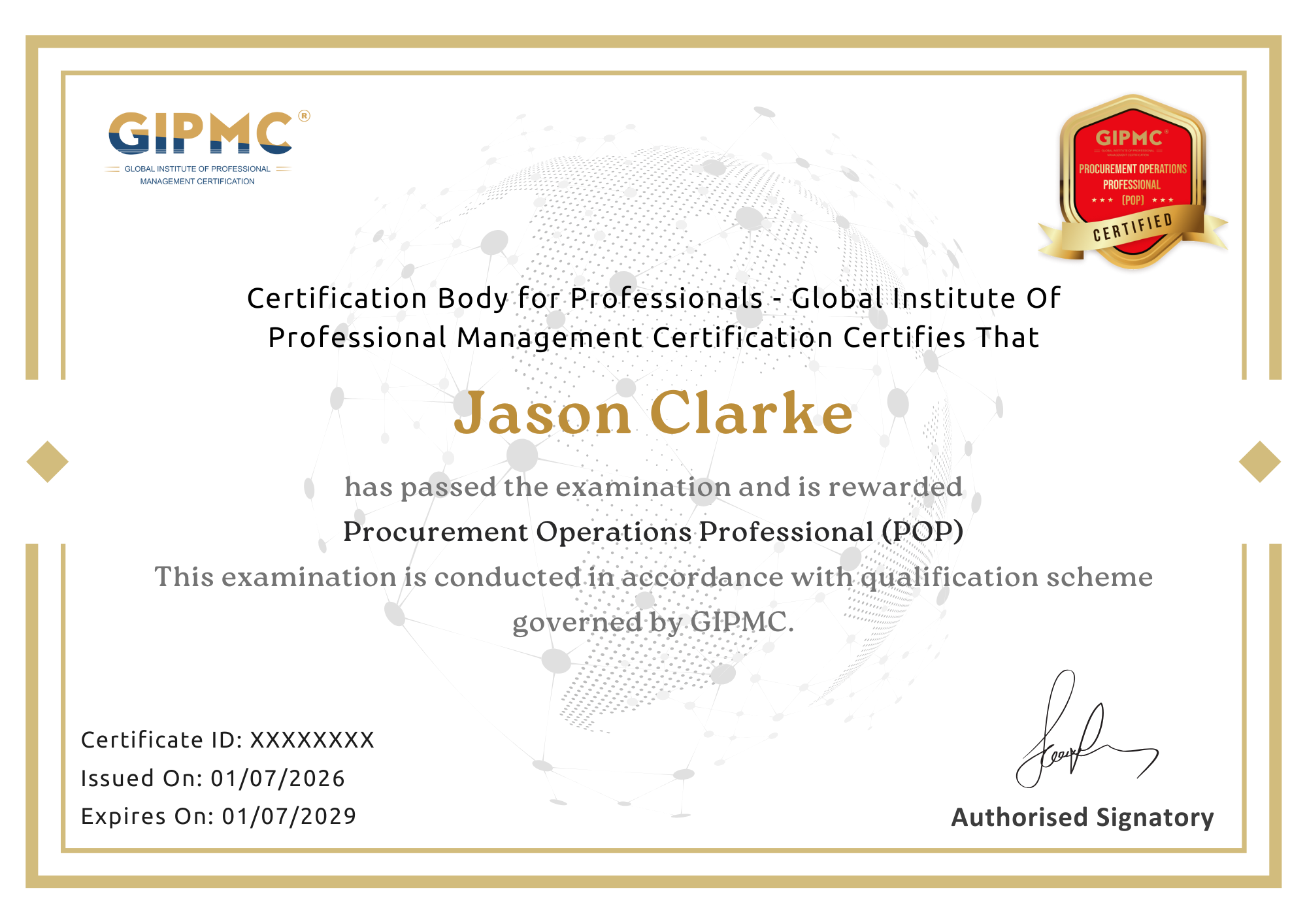
The Procurement Operations Professional (POP) certification is valid for three (3) years from the date of certification award.
Renewal is designed to:
- Maintain professional credibility
- Ensure continued alignment with evolving procurement practices and regulations
- Protect the long-term value of the certification
Renewal Process Includes:
- Completion of defined continuing professional development or knowledge refresh requirements
- Successful renewal assessment or verification, as applicable
- Submission of renewal application before certification expiry
Timely renewal allows professionals to retain active certification status without interruption.