
In today’s highly technology-driven world, software and system development go hand-in-hand. To understand software development and system architecture, the Software Development Life Cycle and System Development Life Cycle are fundamental. Both have a structured and iterative process that is effective in creating high-quality and cost-effective software systems.
When the Software Development Life Cycle breaks down software development into definite, repeatable, independent phases, the System Development Life Cycle derives the plan for the entire project, which includes both hardware and software. But how are these processes different from each other?
In this blog, we are going to highlight the differences between the Software Development Life Cycle and the System Development Life Cycle. Also, the focus will be on understanding the key phases of both life cycles.
The software development life cycle is a structured process that is used by developers to design, test, and deploy high-quality software. It acts as a framework to minimize risks, control costs, and ensure the final product meets customer requirements within scheduled timeframes. But why is this so important?
Without a properly structured lifecycle of software objects, software development becomes chaotic. It provides:
This process consists of phases that contribute through creation, testing, applying, using, and maintenance of any software product. Good quality outputs ensure that risks in all phases are minimized.
Now, let’s look at the crucial phases of the Software Development Life Cycle:
Different professionals implement the Software Development Life Cycle in different ways. However, practitioners predominantly agree that the software development lifecycle has seven key phases.
Here is a table showing different phases of the Software Development Life Cycle in order:
|
Steps |
Key Phases |
Key Activities |
Deliverables |
|
1 |
Planning |
The key scopes of the project are identified. Furthermore, the project goals and requirements are noted. |
The initial project plan is created. |
|
2 |
Analysis |
In this phase, relevant data is gathered and reviewed on project requirements from clients. |
Comprehensive project documentation. |
|
3 |
Design |
Determine project architecture. |
Software design document (SDD). |
|
4 |
Development |
The code is written, and development work is dobe |
A functional prototype of the software is prepared. |
|
5 |
Testing |
The prototype is tested by reviewing and eliminating bugs. |
Optimized software and proper functionalities. |
|
6 |
Deployment |
Deploy code to the production environment. |
Software available to end users. |
|
7 |
Maintenance |
Developers conduct continuous fixes and improvements in the software. |
Updated and optimized version of the software. |
Table 1: Phases of Software Development Life Cycle
Every phase of the Software Development Life Cycle incorporates distinct tasks and objectives. Taken together, these phases form a standardized roadmap for software development.
Want to advance your care as a software developer? Consider taking our Software Quality Engineering Specialist (SQES) certification that enables you to perform quality engineering and integration testing.
To get different desired goals, different methodologies are used in the software lifecycle management processes. Choosing the right Software Development Life Cycle depends on various factors. It is important to check whether the project requirements are clearly defined or likely to change during the development phase.
Now, let’s look at the different Software Development Life Cycle methodologies, which are very common in Software Development Life Cycle:
The methodologies of the Software Development Life Cycle deliver specific workflows for requirements, design, coding, and maintenance. The common methodologies of software lifecycle management include:
Each of these methodologies has a key role in achieving the required objectives in different Software Development Life Cycle phases. By selecting the appropriate methodology, developers can customize the process to fit the unique needs of the clients.
Now, let’s look at the key aspects of another important process, the System Development Life Cycle.
The System Development Life Cycle not only covers software development but also integrates hardware, human resources, process, and infrastructure that are related to the project. It breaks the process into different phases.
The System Development Life Cycle contributes to managing the entire system architecture. This is why system lifecycle management is so important for the development of the entire project system:
The system development life cycle phases are often found to be similar to the key phases of software development. However, the functions and components of each phase are different, which helps maintain a smooth flow.
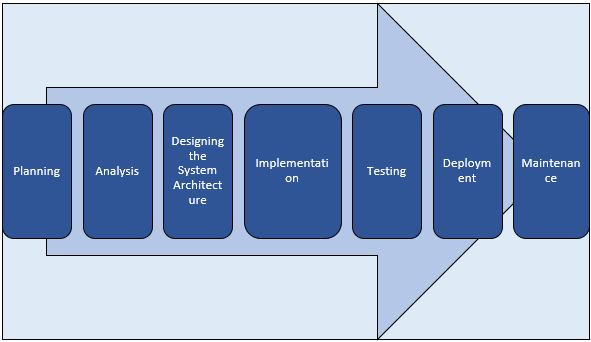
The phases of the System Development Life Cycle focus on the process design and architecture development massively. Here are the key phases of it:
Want to know more about the hardware systems? Join our Data Center Systems Specialist (DCSS) certification and upgrade your credentials.
Now, let’s discuss the differences between these processes.
Both Software Development Life Cycle and System Development Life Cycle are both part of the system environment and development cycle. However, there are certain differences.
Below is a table that highlights the key differences between the two processes:
|
Feature |
Software Development Life Cycle |
System Development Life Cycle |
|
Scope |
Software Applications only |
Entire information systems, including hardware, software, processes, and human resources. |
|
Focus |
Coding, testing, and deployment. |
The entire system architecture. |
|
Phases |
Software-centric |
System-centric |
|
Stakeholders |
Developers, testers, and product owners. |
IT, business operations, and end-users. |
|
End Goal |
Functional Software |
Fully-integrated operational system. |
Table 2: Key Differences Between Software Development Life Cycle and System Development Life Cycle
Are you a software enthusiast? Want to design a system of your own? Participate in our Software Management Associate (SMA) certification and build a strong foundation in software development projects.
The System Development Life Cycle is considered a broader and overarching concept. Software development is considered a subset of it.
The primary objective of a system development is to deliver a fully operational and secure system that solves a business problem. Through this, every system becomes streamlined and capable of meeting the users’ needs.
Both these processes involve maintenance. Software developers deal with bugs and updates. On the other hand, systems deal with hardware upgrades or infrastructure changes.
Agile methodology is generally regarded as better in modern software development because projects are becoming more complex and feedback-dependent. Compared to Waterfall, Agile offers flexibility, faster delivery, and higher customer satisfaction.
The System Development Life Cycle is commonly regarded as riskier among these two processes because it offers a broader and more complicated scope. Since the system focuses on a comprehensive network, there are higher risks of integration failures and cost overruns in this project.